SNCR/SCR Hybrid Denitrification Process for Industrial Flue Gas NOx Control
Product Details
SNCR/SCR Hybrid Denitrification Process for Industrial Flue Gas NOx Control
Technology Overview
SNCR/SCR hybrid flue gas denitrification is a mature technology applied to coal-fired utility boilers. It is a primary technology alongside SCR (Selective Catalytic Reduction) and SNCR (Selective Non-Catalytic Reduction).
The SNCR/SCR hybrid is an integrated process, not merely the combination of separate SCR and SNCR systems. It is a novel, efficient, and mature improvement to SCR technology. The hybrid approach combines the lower capital cost of SNCR with the high efficiency of SCR.
Basic Principle
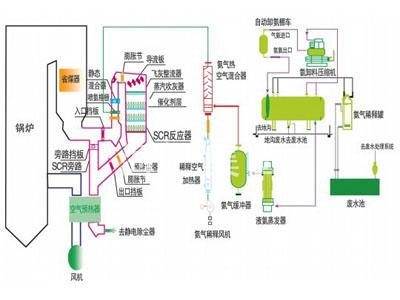
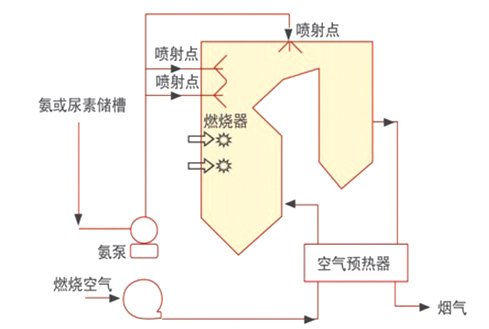
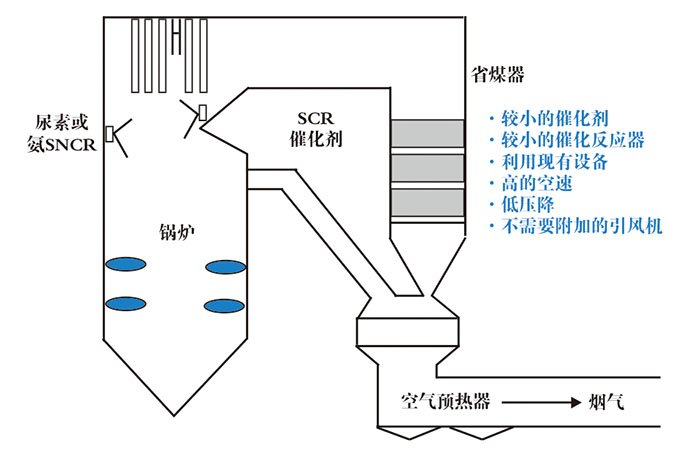
The process uses a proven denitrification design with significant operating history on large utility boilers. The front end of the process is an SNCR system. SNCR injects a urea solution to reduce NOx within the boiler. The reaction produces some ammonia that passes through with the flue gas. This ammonia then enters a smaller downstream SCR reactor, where it further reduces NOx. This approach utilizes the reagent efficiently and controls ammonia slip.
Advantages of the Hybrid Approach
The SNCR system installed in the boiler substantially reduces the NOx concentration entering the SCR. Lower inlet NOx requires significantly less catalyst volume and a smaller SCR reactor. The complex ammonia injection grid (AIG) required for stand-alone SCR is not needed. These factors reduce the high capital cost of the SCR system and avoid certain catalyst limitations.
Recommended Applications
The hybrid process is particularly suited for specific conditions. Coal with high sulfur content may form ammonium bisulfate (ABS) deposits that plug equipment. Coal with high ash content can cause catalyst fouling. Coal with high acid or alkali content can poison catalysts. Limited site space may not accommodate a full-size SCR reactor. Low load operation or frequent load changes promote ABS formation. Existing sites needing major modifications to install large catalyst volumes may benefit. Balanced draft systems requiring boiler system rebalance are also candidates. The process avoids using hazardous anhydrous ammonia.
Formula
SNCR plus a smaller SCR equals the combined SNCR/SCR hybrid.
Process Characteristics
- NOx removal efficiency: 80 to 90 percent
- Lower catalyst volume required
- Reduced SO₂/SO₃ conversion and lower ABS deposition
- Smaller reactor footprint with better space adaptability
- Lower system pressure drop
- No SCR bypass needed
- Reduced catalyst disposal volume
- Safe urea solution as reducing agent
- Phased installation possible to meet regulatory schedules