Industrial Steep-Angle Belt Conveyor for High-Incline Bulk Material Transport
Product Details
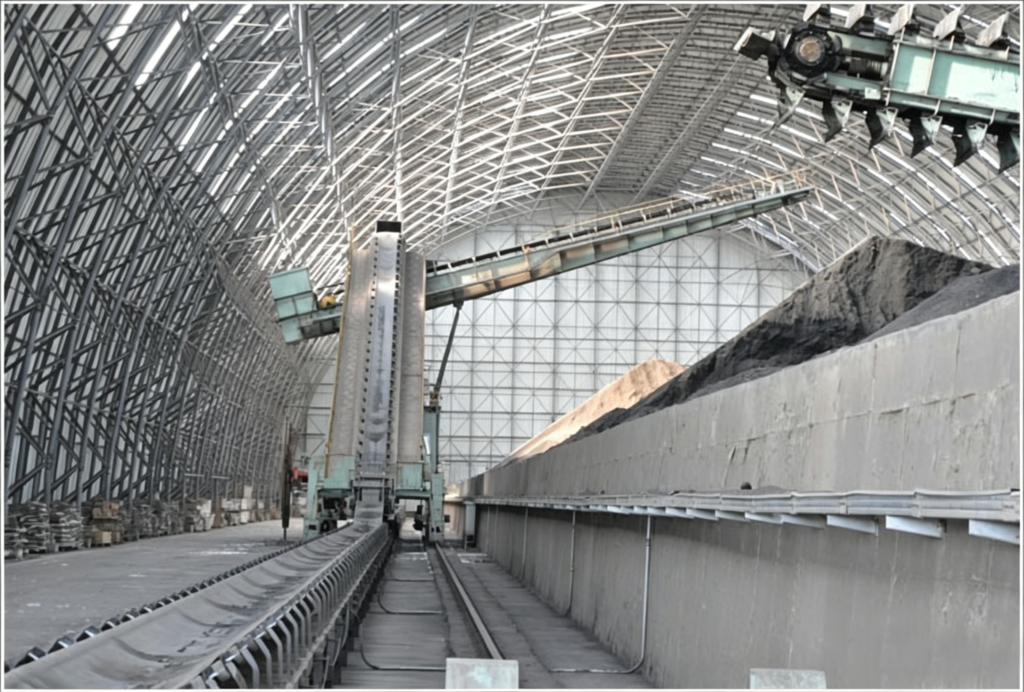
The steep-angle belt conveyor is a continuous bulk material handling device designed for general applications. It uses a conveyor belt with corrugated sidewalls and transverse partitions (cleats or diaphragms). This design makes the conveyor particularly suitable for high-incline conveying where conventional belt conveyors cannot operate effectively.
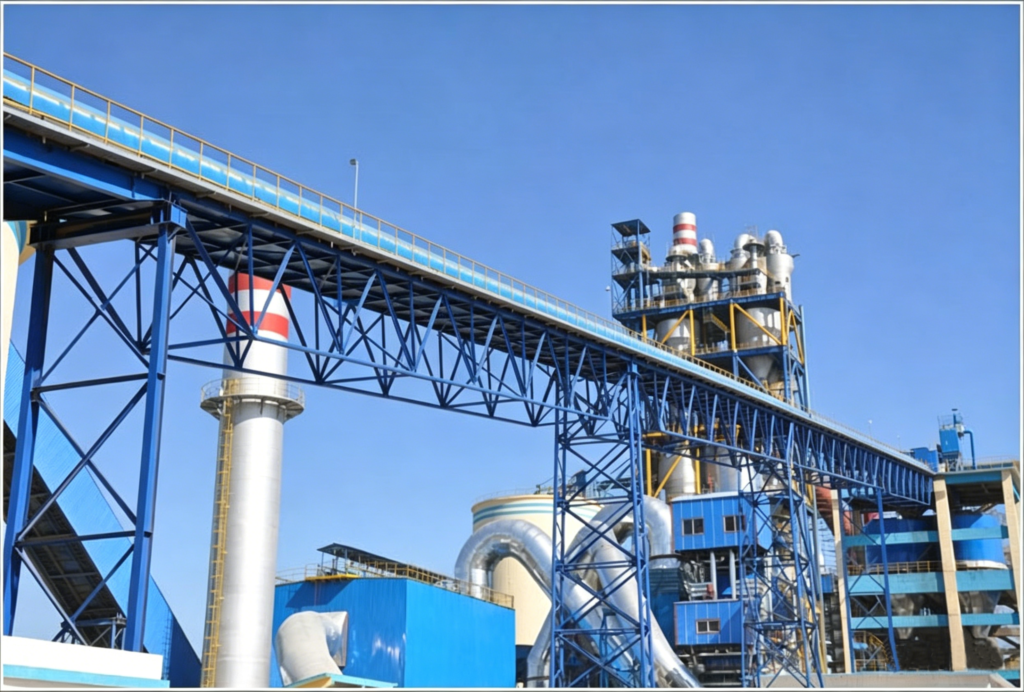
Steep-angle belt conveyors are widely used across many industries, including coal mining, chemical processing, building materials, metallurgy, power generation, light industry, grain handling, port terminals, ship loading, and thermal power plants. By using a steep-angle belt conveyor to transport bulk materials, facilities can significantly reduce the floor space occupied by the conveying system. These conveyors achieve incline angles that conventional belt conveyors simply cannot reach.
Key Features and Benefits
The corrugated sidewall belt prevents material from spilling off the sides even at steep angles. The transverse partitions (cleats or diaphragms) support the material column, preventing it from sliding backward. This combined design allows conveying angles up to 90 degrees in some configurations, though typical steep-angle applications range from 45 to 75 degrees.
Space Savings
One of the most significant advantages of the steep-angle belt conveyor is its small footprint. A steep-angle conveyor can lift material vertically or near-vertically, eliminating the long horizontal approach sections required by conventional belt conveyors. This space-saving characteristic is especially valuable in retrofit projects where existing space is limited, or in new facilities where reducing building size lowers capital costs.
Application Flexibility
Steep-angle belt conveyors handle a wide range of bulk materials, including coal, ore, sand, gravel, limestone, grain, chemical powders, and recycled materials. They can be configured in various arrangements: C-shaped (vertical lift with horizontal feed and discharge), S-shaped (multiple direction changes), or straight vertical.
Operational Advantages
These conveyors operate reliably in harsh environments, including dusty, wet, or outdoor installations. Enclosed designs are available to prevent dust emission and protect the conveyed material from weather. Maintenance access is typically provided along the conveying path for belt inspection and cleaning.