
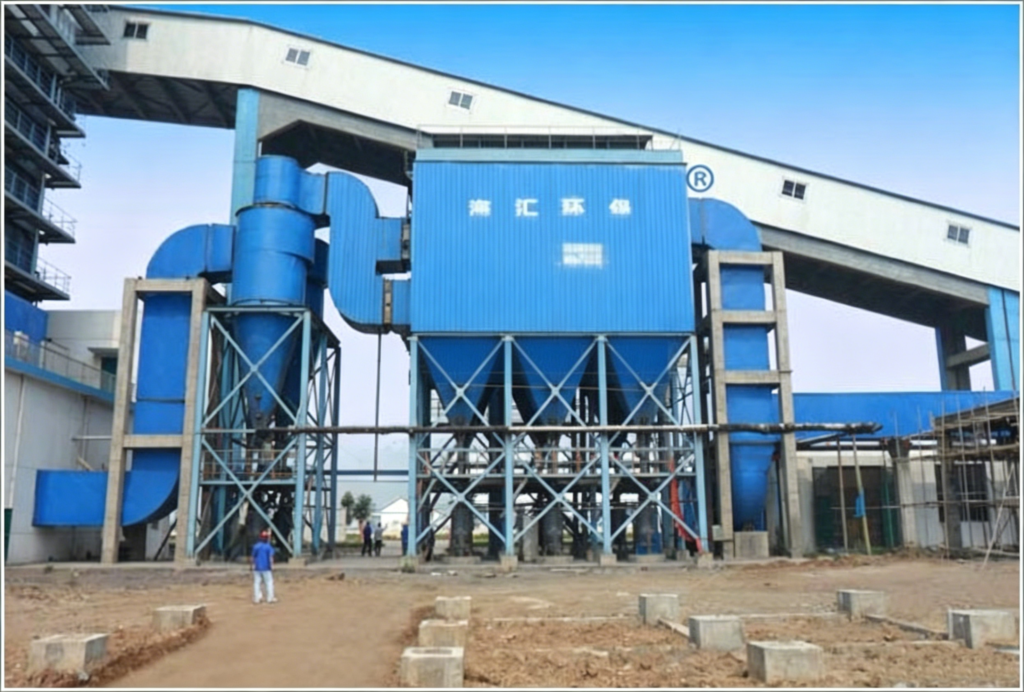
Biomass Cogeneration Plant Dust Removal Project—Pulse-Jet Baghouse Dust Collector
Case study
The Haihui brand pulse-jet baghouse dust collector employs an advanced principle of compartmentalised airflow interruption and offline cleaning. This technology enables sequential cleaning of each compartment without disrupting the overall system operation, thereby significantly enhancing cleaning efficiency. The equipment achieves a dust removal efficiency of up to 99.9%, with outlet emission concentrations consistently maintained below 10 mg/Nm³, effectively approaching zero emissions, and is capable of meeting the increasingly stringent national and local environmental emission standards over the long term.
In terms of the control system, the dust collector utilises a PLC (Programmable Logic Controller) for automated control, with intelligent management of all aspects including cleaning sequences, pulse intervals and air supply pressure msonitoring. The entire dust collection system is capable of unattended automatic operation and can interface with the plant’s central control system, enabling real-time feedback of equipment operating status to the plant’s main system, as well as remote dispatching and control.
With user maintenance convenience in mind, the dust collector is designed so that all maintenance and servicing tasks are carried out on the exterior of the clean air chamber. Operators can complete routine inspections and component replacements without entering the interior of the equipment, thereby enhancing safety and significantly reducing maintenance time.
The Haihui brand pulse-jet baghouse dust collector also boasts the following outstanding features: compact footprint, rational structural design, excellent sealing performance, flexible and reliable actuating mechanisms, bottom-inlet air flow configuration, combined offline cleaning and offline maintenance capabilities, fully enclosed filtration zone, external maintenance access, simple operation, and low operating costs. These advantages make it widely applicable in flue gas treatment scenarios across industries such as power generation, metallurgy, building materials, and chemicals, establishing it as a vital piece of equipment for enterprises seeking to achieve green production.
Similar cases
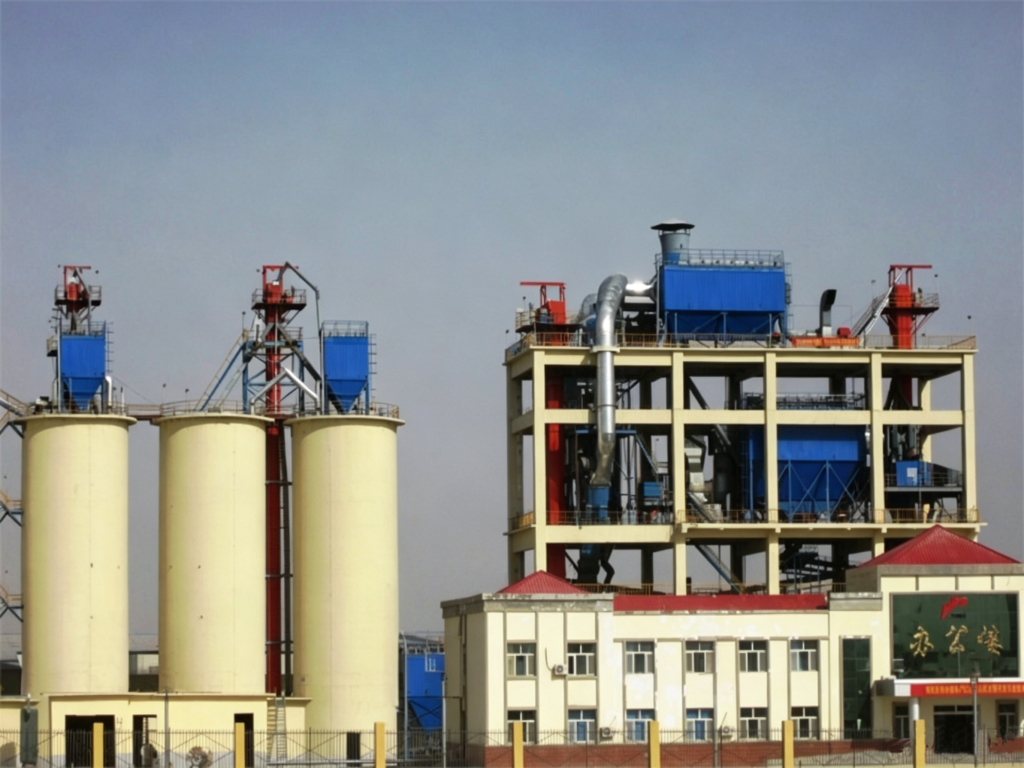
Large-Scale Dust Collection Project at the Yingjisha Grinding Plant in Kashgar, Xinjiang—Pulse-Jet Baghouse Dust Collector
Case study More than 20 employees of Haihui Group, far from their homes and loved…
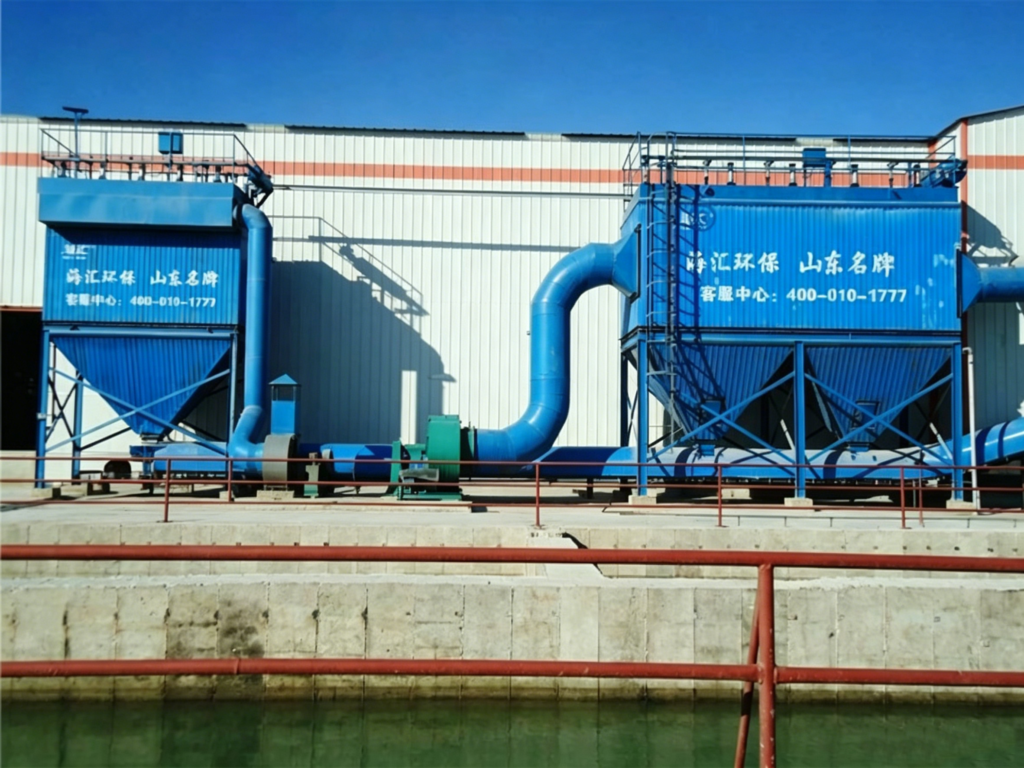
Dust Removal Project for a Washed Gravel Production Line—Haihui Pulse-Jet Baghouse Dust Collector
Case study Haihui Group’s pulse-jet baghouse dust collectors have earned widespread acclaim in the industrial…
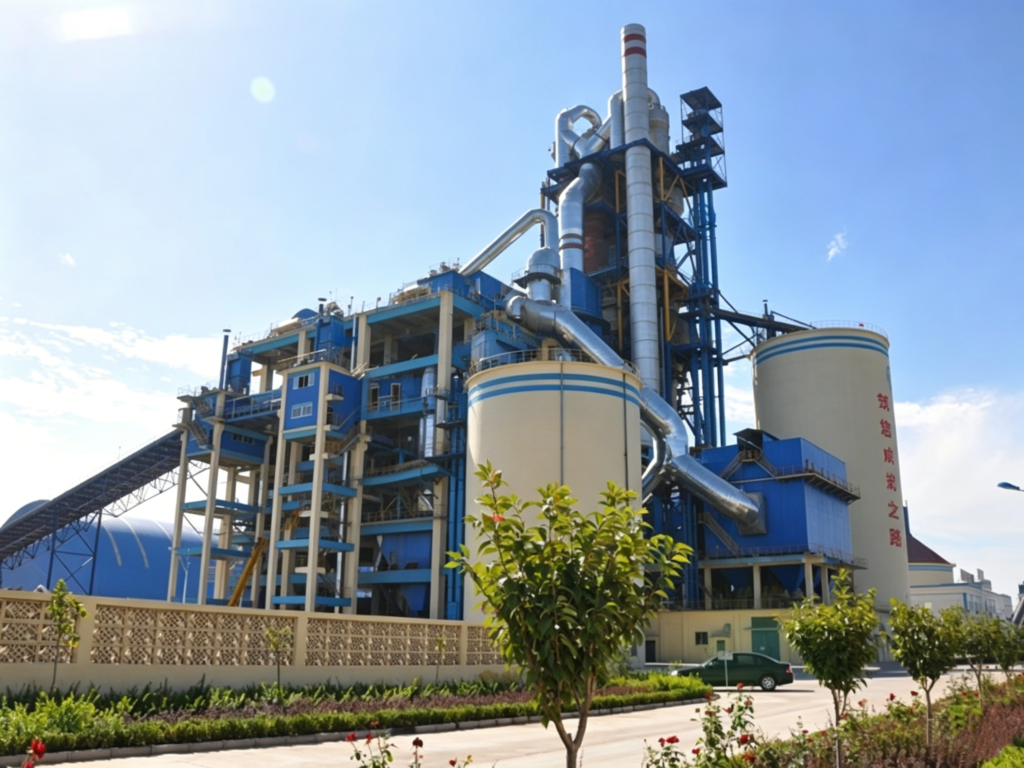
Application of SNCR DeNOx Technology in a New Dry-Process Cement Clinker Production Line—DeNOx at a Cement Plant
Case study Haihui Group’s SNCR denitrification technology, which utilises urea as a reducing agent, has…
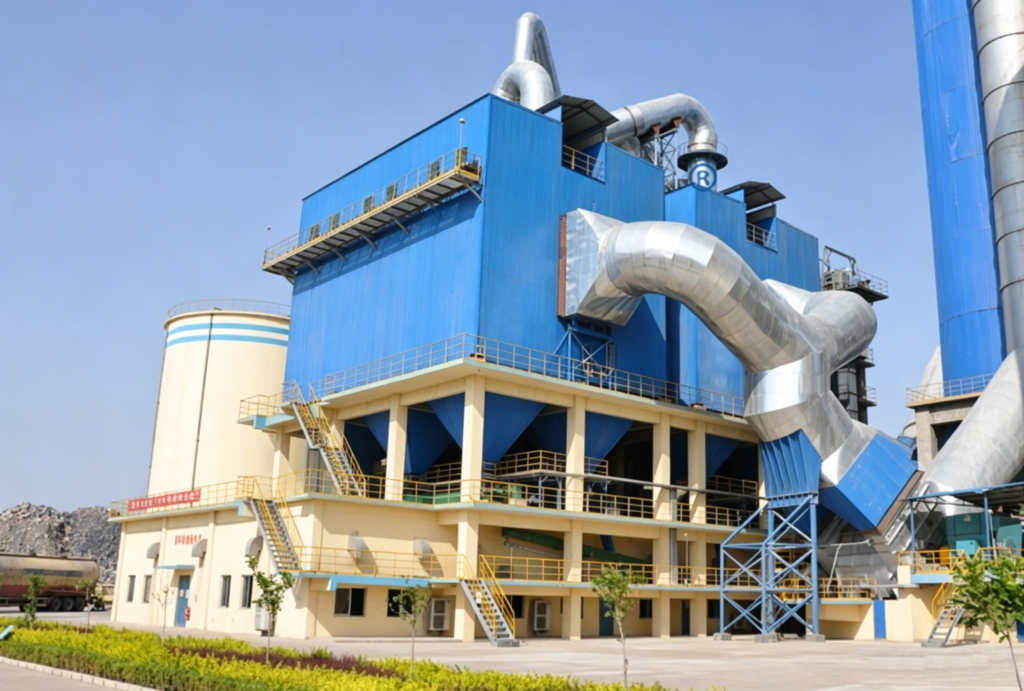
Dust Removal Project for a 5,500-Ton-Per-Day New Dry Process Cement Clinker Production Line—Haihui Pulse-Jet Baghouse Dust Collector
Case study Haihui Group’s pulse-jet baghouse dust collectors have earned widespread acclaim in the field…
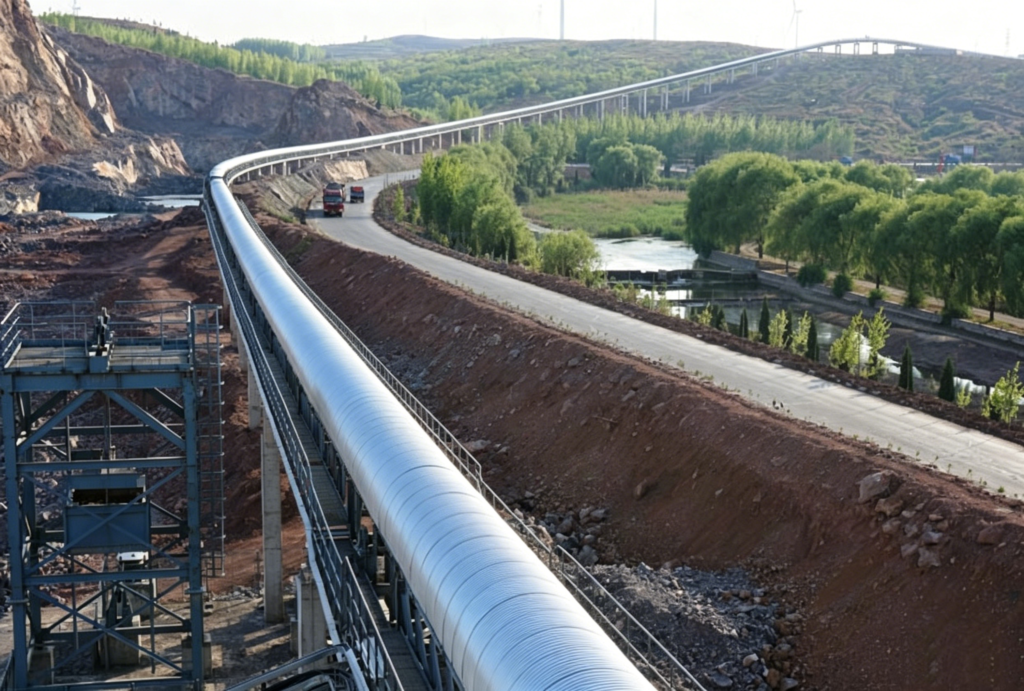
3.8 km Limestone Conveying Project for an Indian Client — Belt Conveyors | Drums | Idlers | Idler Supports
Case study Over a period of nine and a half months, spanning all four seasons,…
 English
 العربية
 Русский
 Español
 Português do Brasil