
Application of SNCR DeNOx Technology in a New Dry-Process Cement Clinker Production Line—DeNOx at a Cement Plant
Case study
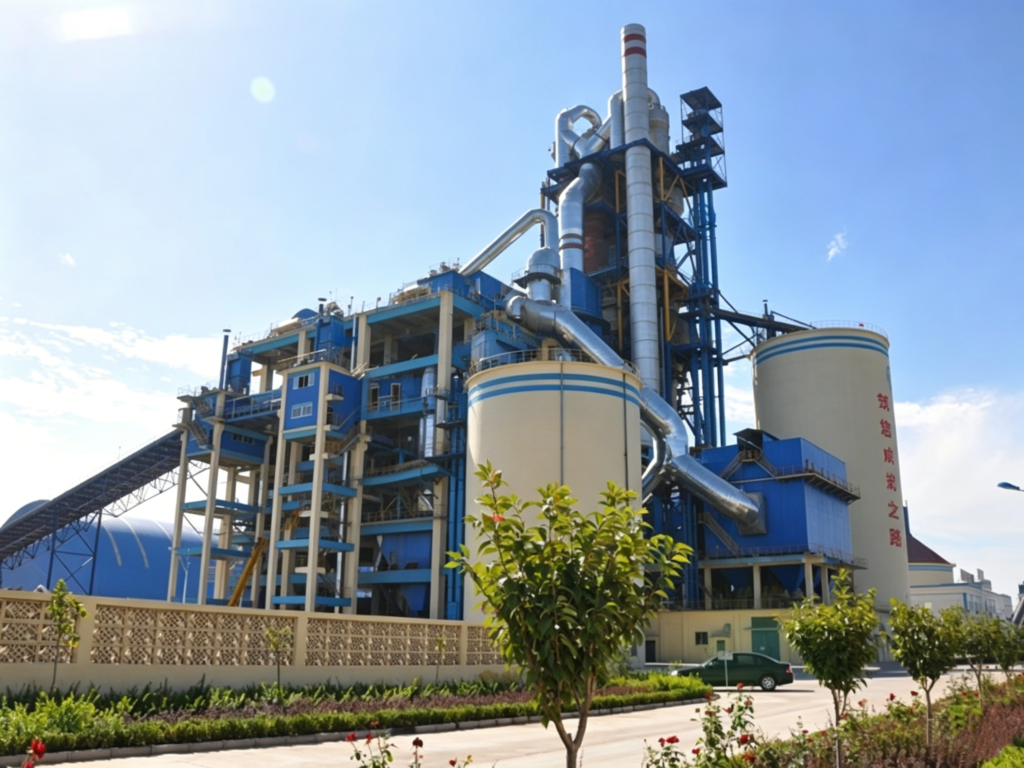
Haihui Group’s SNCR denitrification technology, which utilises urea as a reducing agent, has been successfully implemented in a 5,000 t/d new dry-process cement clinker production line at a major cement manufacturer. This denitrification project represents a significant achievement for Haihui Group in the field of flue gas treatment within the cement industry, and is of great importance in effectively reducing nitrogen oxide emissions and improving regional ambient air quality.
The image above shows the denitrification project implemented by Haihui Group for a 5,500 t/d new dry-process cement clinker production line, with SNCR denitrification technology at its core. This technology achieves highly efficient denitrification by precisely injecting the urea reductant into the appropriate temperature window within the cement kiln’s decomposer, thereby reducing nitrogen oxides in the flue gas to harmless nitrogen and water under high-temperature conditions.
Haihui Group’s SNCR denitrification technology offers several notable advantages. Firstly, the reductant (urea) poses no risk of leakage or spillage during storage or use, ensuring a high level of safety. Secondly, as the process does not require catalysts, both the initial investment and long-term operating costs are low, making it an economical and reliable method for NOx control. Furthermore, the system features a compact overall structure, occupies minimal space, and allows for flexible on-site layout. In terms of operation, the equipment features a high degree of automation, with operating parameters that are easy to control and adjust. It requires relatively simple technical skills from operators, involves minimal maintenance, and is user-friendly.
Thanks to these advantages, Haihui Group’s SNCR denitrification technology has been well received and highly praised by clients in the cement, power and metallurgy industries, and has become one of the key technical means for enterprises to achieve ultra-low NOx emissions and promote green production.
Similar cases
Large-Scale Dust Collection Project at the Yingjisha Grinding Plant in Kashgar, Xinjiang—Pulse-Jet Baghouse Dust Collector
Case study More than 20 employees of Haihui Group, far from their homes and loved…
Dust Removal Project for a Washed Gravel Production Line—Haihui Pulse-Jet Baghouse Dust Collector
Case study Haihui Group’s pulse-jet baghouse dust collectors have earned widespread acclaim in the industrial…
Application of SNCR DeNOx Technology in a New Dry-Process Cement Clinker Production Line—DeNOx at a Cement Plant
Case study Haihui Group’s SNCR denitrification technology, which utilises urea as a reducing agent, has…
Dust Removal Project for a 5,500-Ton-Per-Day New Dry Process Cement Clinker Production Line—Haihui Pulse-Jet Baghouse Dust Collector
Case study Haihui Group’s pulse-jet baghouse dust collectors have earned widespread acclaim in the field…
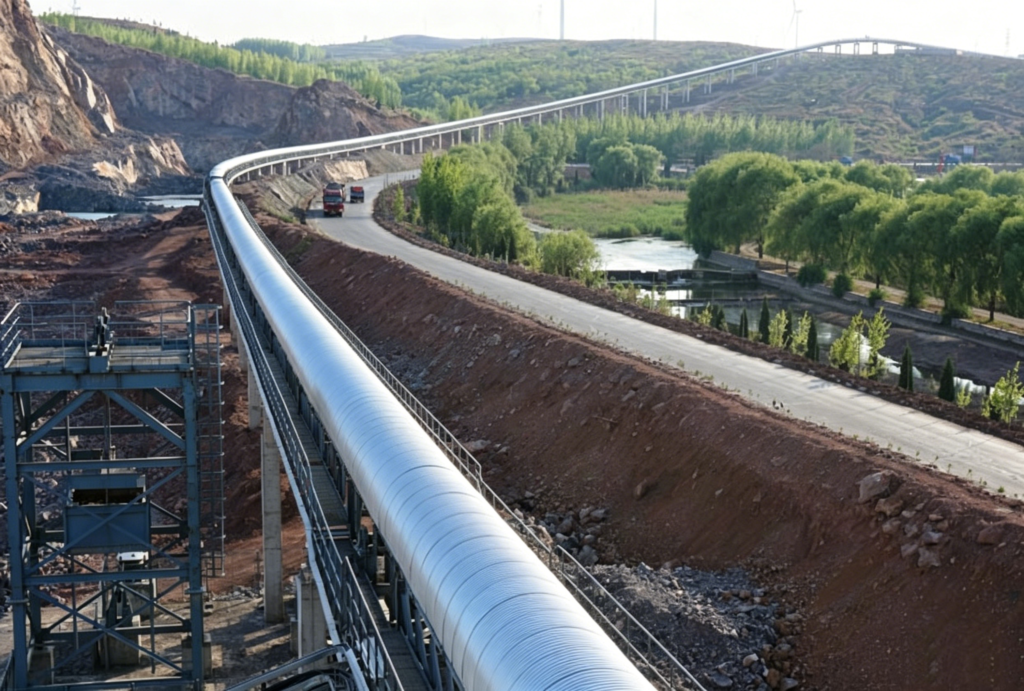
3.8 km Limestone Conveying Project for an Indian Client — Belt Conveyors | Drums | Idlers | Idler Supports
Case study Over a period of nine and a half months, spanning all four seasons,…
 English
 العربية
 Русский
 Español
 Português do Brasil