Printing and Dyeing Wastewater Technology for Color and COD Removal
Product Details
Printing and Dyeing Wastewater Technology for Color and COD Removal
Key Technologies
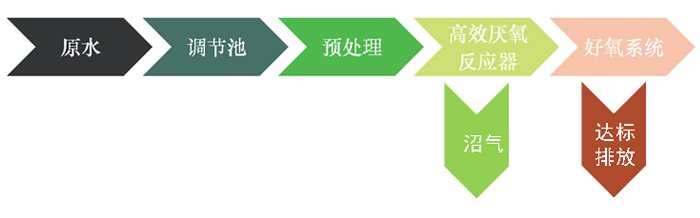
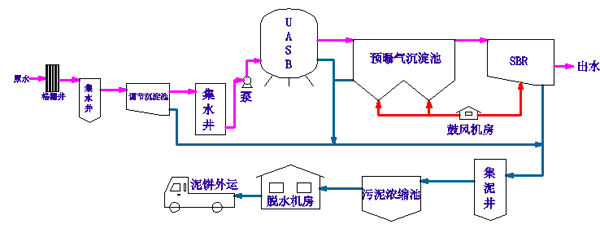
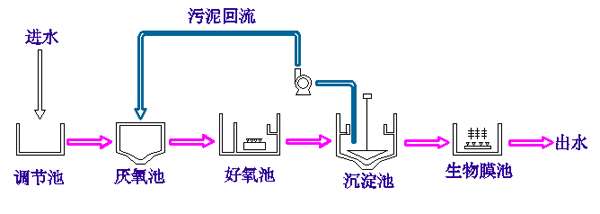
The anaerobic hydrolysis and acidification stage modifies the molecular structure of complex organic compounds. Large, non-biodegradable dye molecules are broken down into smaller, more readily biodegradable intermediates. This transformation creates favorable conditions for subsequent aerobic treatment.
Sludge return is employed to maintain high sludge concentration within the system. Returned sludge provides active biomass to the anaerobic stage. The anaerobic tank also digests a portion of the sludge, reducing overall sludge production. This internal sludge management minimizes the volume of waste sludge requiring disposal.
The anaerobic tank influent is distributed using hydraulic pulse technology. Pulsed flow creates intermittent high-velocity conditions that mix the sludge bed without mechanical mixers. This improves contact between wastewater and biomass. The effluent from the anaerobic tank passes through a three-phase separator, which captures biogas, settles solids, and allows clarified liquid to exit. These features enhance overall treatment efficiency.
Both the anaerobic tank and the aerobic tank are equipped with fiber media. The media provide attachment surfaces for bacterial growth. This fixed-film design helps maintain high biomass concentration within the tanks, even under varying hydraulic loads. The media also prevent biomass washout during peak flow events.
Technical Advantages
Stable and reliable treatment performance is achieved under varying influent conditions. The system resists shock loads from changes in flow rate, temperature, or pollutant concentration. CODcr and color removal are particularly effective.
The anaerobic stage operates at ambient temperature. No heating is required, even in moderate climates. Energy consumption is low because no temperature control is needed. Management requirements are minimal. Operating costs are economical.
Sludge production is low. The anaerobic stage digests a significant portion of the organic solids. The well-designed system creates good working conditions with minimal odor and reduced sludge handling. Equipment footprint is small, making the system suitable for sites with limited space. Capital investment is relatively low.
Customized Implementation
Haihui provides specific implementation plans based on each customer’s actual site conditions, wastewater characteristics, and discharge requirements.