SNCR Flue Gas Denitrification Technology for Industrial NOx Emission Control
Product Details
SNCR Flue Gas Denitrification Technology for Industrial NOx Emission Control
Technology Overview
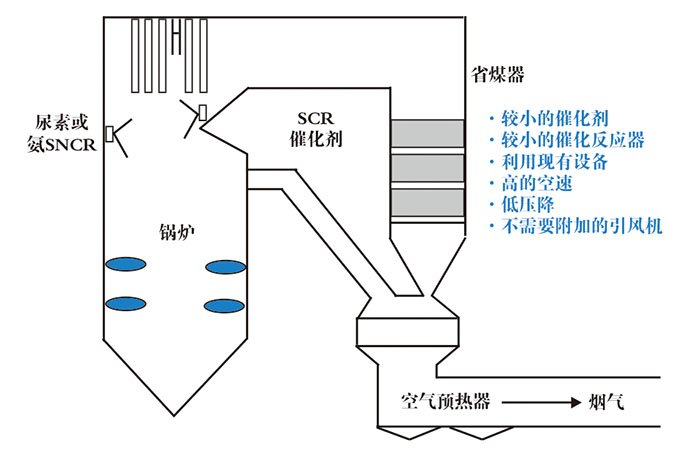
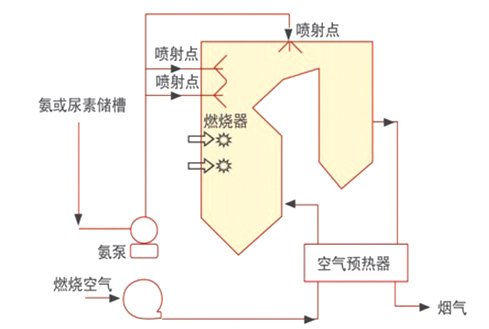
SNCR (Selective Non-Catalytic Reduction) is a low-cost denitrification technology. Unlike SCR which requires a catalyst, SNCR uses the furnace itself as the reactor. A reducing agent—typically aqueous ammonia or urea solution in industrial applications—is injected into the furnace. The injection occurs at the temperature window of 900 to 1100 degrees Celsius. Within this temperature range, the reducing agent reacts chemically with nitrogen oxides (NOx) present in the flue gas. The reaction produces harmless nitrogen (N₂) and water (H₂O). This process removes NOx from the flue gas without the need for a separate catalytic reactor vessel.
How SNCR Works
The reducing agent is atomized through spray nozzles mounted on the furnace walls. Fine droplets penetrate the flue gas stream. At the correct temperature, the reducing agent decomposes to form reactive species such as ammonia (NH₃) or cyanuric acid fragments. These species react selectively with NOx. The selectivity means they react preferentially with NOx rather than with oxygen. This selectivity is critical to achieving NOx reduction without excessive chemical consumption.
Advantages of SNCR
Low Capital Cost
SNCR requires no catalyst and no separate reactor vessel. The equipment consists primarily of storage tanks, pumps, piping, and injection nozzles. Installation is relatively simple. Capital cost is significantly lower than SCR.
Simple Retrofits
SNCR can be retrofitted to existing boilers with minimal modification. No major structural changes are required. The system can be installed during scheduled maintenance outages.
Flexible Reducing Agent Options
Both aqueous ammonia and urea solution are commercially available. Aqueous ammonia is typically 19 to 29 percent ammonia by weight. Urea solution is typically 10 to 40 percent. Choice depends on local availability, handling requirements, and safety considerations.
Limitations of SNCR
SNCR is less efficient than SCR. Typical NOx removal is 30 to 60 percent depending on temperature, mixing, and residence time. Temperature control is critical. Too low, and the reaction does not proceed. Too high, and the reducing agent oxidizes to form additional NOx. Proper nozzle placement and tuning are essential.
Customized Implementation
Haihui provides specific implementation plans based on each customer’s actual site conditions, boiler characteristics, and NOx reduction requirements.