Starch Wastewater Treatment Technology for COD, BOD, SS and Nutrient Control
Product Details
Starch Wastewater Treatment Technology for COD, SS and Nutrient Removal
Key Technology
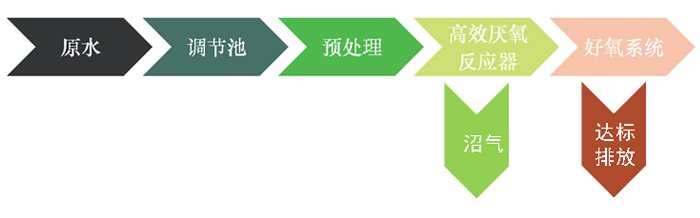
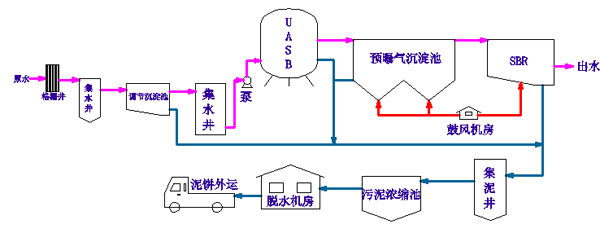
High-concentration organic wastewater from starch processing is treated using an anaerobic-aerobic biological treatment method. The anaerobic treatment unit uses a UASB (Upflow Anaerobic Sludge Blanket) reactor. The aerobic treatment unit uses an SBR (Sequencing Batch Reactor) process.
During anaerobic treatment, difficult-to-degrade CODcr is converted into more easily biodegradable organic matter. Complex high-molecular-weight organic compounds are broken down into simpler low-molecular-weight compounds. This pretreatment improves the effectiveness of subsequent aerobic treatment.
The SBR process operates in batch mode. Each operating cycle consists of five phases: fill, react, settle, decant, and idle. Within each cycle, distinct microbial populations develop that are adapted to the substrate characteristics of each phase. The process includes internal sludge recirculation. Sludge production is low compared to continuous-flow systems.
Technical Advantages
Anaerobic-Aerobic Process Economics
Starch wastewater is a high-concentration organic waste stream. The anaerobic-aerobic process route is economically advantageous. The anaerobic stage treats the bulk of the organic load with low energy consumption. No aeration is required for the anaerobic stage. Additionally, the anaerobic process produces methane-rich biogas that can be captured and used as an energy source, offsetting plant operating costs.
UASB Design Features
The UASB reactor features a dense sludge bed at the bottom. Treatment efficiency depends on intimate contact between the incoming wastewater and the granular sludge. The upflow velocity distributes the wastewater evenly through the sludge bed. The three-phase separator at the top of the reactor separates biogas, liquid, and solids. This separator allows a long sludge retention time while maintaining a short hydraulic retention time, resulting in high treatment efficiency.
SBR Process Maturity and Stability
The SBR aerobic biological treatment method is a mature, well-understood technology. It provides stable treatment performance under varying organic loads. Effluent quality is consistently good. The batch operation allows the operator to adjust cycle times in response to changes in wastewater strength or flow rate.
Customized Implementation
Haihui provides specific implementation plans based on each customer’s actual site conditions, wastewater characteristics, and discharge requirements.
处理生活污水回用技术.gif)