
How to Choose and Maintain Return Rollers for Belt Conveyors
- 1. Why Does the Return Roller Matter for Belt Conveyors?
- 2. What Are the Different Types of Return Rollers?
- 3. How Does Return Roller Design Affect Belt Tracking?
- 4. What Materials Are Used in Return Roller Manufacturing?
- 5. How Should Return Rollers Be Installed and Maintained?
- 6. What Are the Common Failure Modes of Return Rollers?
- 7. How Do You Select the Right Return Roller for Your Application?
- 8. Conclusion
- 9. FAQ
- 10. References
Return rollers look simple—just a straight roller supporting the empty belt on its way back. But when you’re running 24/7, that simple roller becomes the difference between smooth tracking and belt damage. One seized return roller can cause belt sag, edge wear, and tracking problems that ripple through the entire conveyor system.
Haihui engineers in 2025 emphasize roller straightness, seal integrity, and bearing life as the foundation of reliable return roller performance in heavy industrial environments.
1. Why Does the Return Roller Matter for Belt Conveyors?
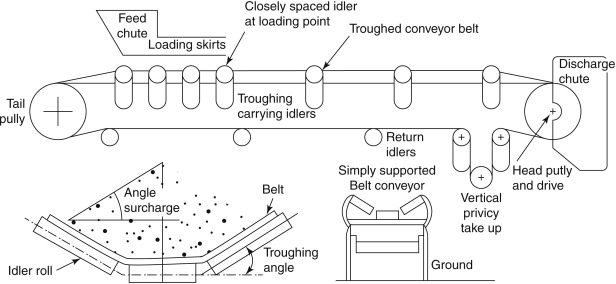
The return roller supports the empty belt on the return side of the conveyor. While it doesn’t carry material, its condition directly affects belt tracking, belt life, and overall system reliability.
In heavy industries, return rollers face:
- Dust and debris from the material handling environment
- Moisture and corrosion
- Belt tension and vibration
- Continuous operation
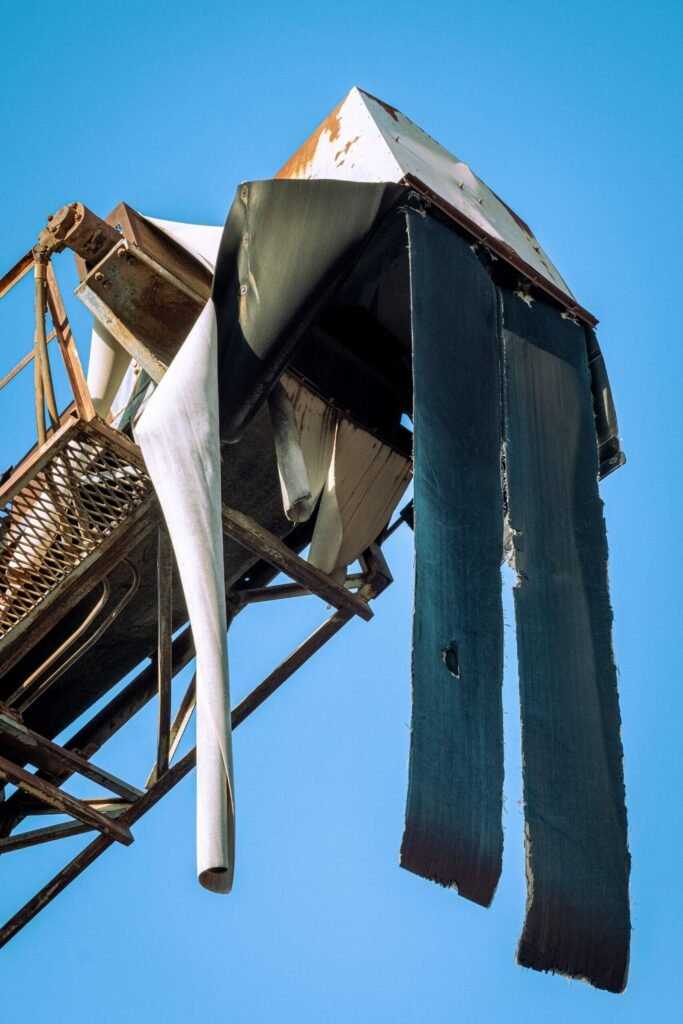
A return roller failure doesn’t stop the belt immediately. It causes tracking issues, edge wear, and belt damage that become expensive problems.
2. What Are the Different Types of Return Rollers?
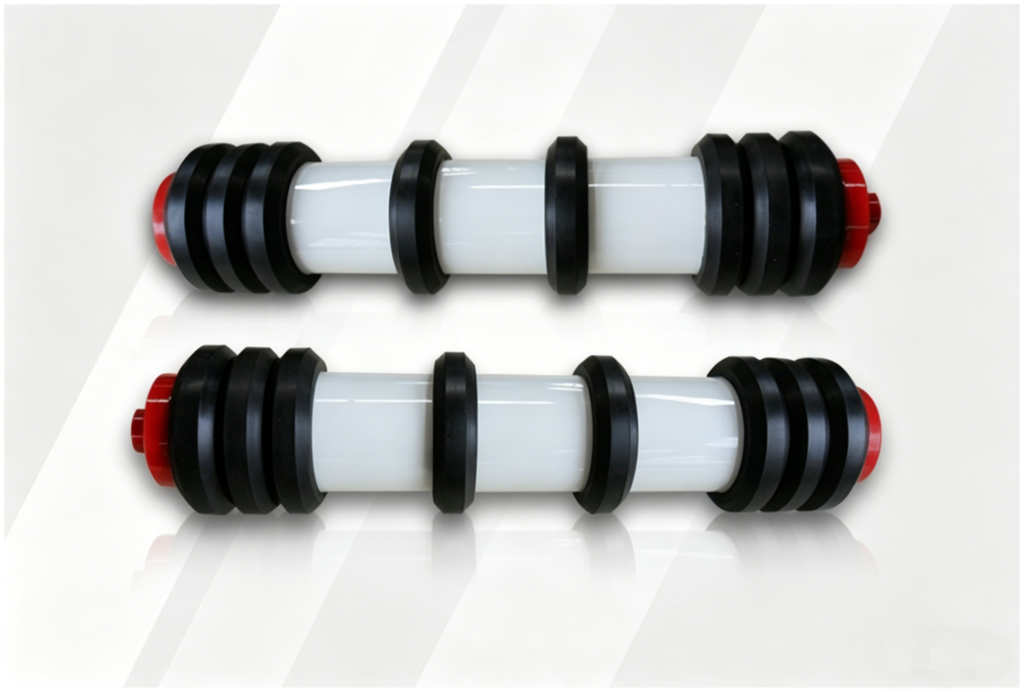
Return rollers come in different designs to suit various operating conditions. The choice affects tracking, cleaning, and maintenance frequency.
| Roller Type | Best For | Key Feature |
|---|---|---|
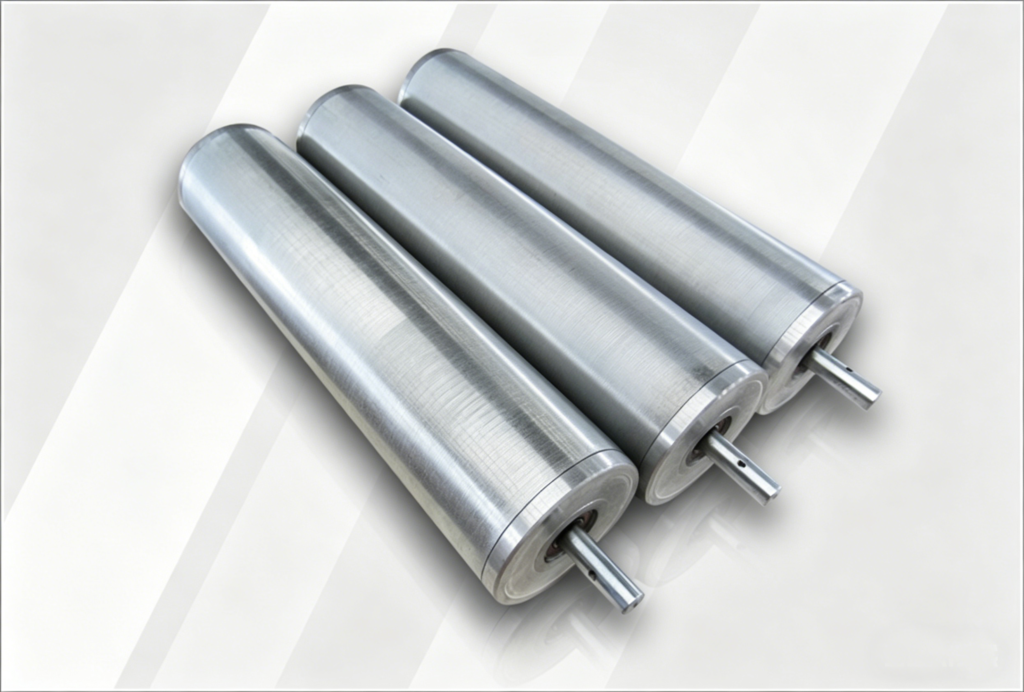
| Flat return roller | Standard applications | Simple, cost-effective |
| V-return roller | Wide belts | Self-centering, improves tracking |
| Rubber disc return roller | Sticky materials | Self-cleaning, reduces buildup |
| Spiral return roller | Wet or sticky materials | Self-cleaning, prevents material buildup |
| Self-aligning return roller | High tracking risk | Corrects belt misalignment |
The right return roller for one application might be the wrong choice for another. There’s no universal option.
3. How Does Return Roller Design Affect Belt Tracking?
Belt tracking on the return side depends heavily on roller alignment, straightness, and surface condition.
Key Factors
| Factor | Impact on Tracking | Typical Specification |
|---|---|---|
| Roller straightness | Prevents belt drift | ≤ 0.5 mm per meter |
| Roller alignment | Maintains belt center | Perpendicular to belt line |
| Surface condition | Prevents belt slip | Smooth, no buildup |
| Bearing condition | Maintains rotation | Low rotational resistance |
Experience Formula for Return Roller Spacing
S_return ≈ 1.5 × S_carry
Where:
- S_return = return roller spacing (m)
- S_carry = carry roller spacing (m)
Reference: CEMA belt conveyor design standards
Example: For a conveyor with 1.2 m carry roller spacing, return roller spacing is approximately 1.8 m.
Proper spacing prevents belt sag, which prevents tracking problems.
4. What Materials Are Used in Return Roller Manufacturing?
Return roller material selection affects durability, corrosion resistance, and service life.
| Component | Primary Material | Typical Specification | Function |
|---|---|---|---|
| Tube | Carbon steel or stainless steel | Q235B, Q345B | Provides structural strength |
| Shaft | Cold-drawn steel | 45# steel | Supports load and rotation |
| Bearing | Deep-groove ball bearing | 6204, 6205, 6206 | Supports rotation |
| Seal | Labyrinth or contact seal | Multi-stage labyrinth | Prevents dust ingress |
| Coating | Electro-galvanized or hot-dip galvanized | 8–12 μm or 50–80 μm | Corrosion protection |
| Grease | Lithium EP2 | -20°C to 120°C range | Lubricates bearings |
The tube wall thickness determines how much the roller can deflect under belt tension. Thin tubes deflect, and deflection kills bearings.
5. How Should Return Rollers Be Installed and Maintained?
Installation and maintenance practices determine whether the roller achieves its expected service life.
Installation Checklist
| Step | Description | Quality Check |
|---|---|---|
| Frame alignment | Ensure mounting frame is square | Level and perpendicular |
| Roller placement | Install roller in frame brackets | Secure fit |
| Belt tension | Adjust belt tension to specification | Check deflection |
| Tracking check | Run belt and check tracking | Observe for drift |
| Seal inspection | Verify seal integrity | No visible damage |
Maintenance Schedule
| Activity | Frequency | Purpose |
|---|---|---|
| Visual inspection | Weekly | Check for damage or wear |
| Rotation check | Monthly | Ensure free rotation |
| Bearing temperature | Monthly | Detect overheating |
| Seal inspection | Quarterly | Check for damage |
| Replacement | When failed or worn | Prevent belt damage |
A maintenance program that ignores return rollers eventually pays for a belt replacement. The roller is cheaper than the belt.
6. What Are the Common Failure Modes of Return Rollers?
Return rollers fail in predictable ways. Understanding these failures helps prevent them.
Failure Modes
| Failure Mode | Cause | Consequence |
|---|---|---|
| Bearing seizure | Dust ingress, lubrication failure | Roller stops rotating |
| Tube wear | Abrasive material, misalignment | Belt edge damage |
| Seal failure | Contaminant ingress | Bearing failure |
| Shaft bending | Overload, impact | Roller misalignment |
| Coating failure | Corrosion | Reduced service life |
Failure Prevention
| Measure | Benefit |
|---|---|
| Regular cleaning | Reduces material buildup |
| Seal maintenance | Prevents dust ingress |
| Bearing lubrication | Extends bearing life |
| Alignment checks | Prevents uneven wear |
A seized return roller doesn’t stop the belt immediately. It grinds away at belt edges until the belt fails.
7. How Do You Select the Right Return Roller for Your Application?
Return roller selection depends on the operating environment, belt width, and material characteristics.
Selection Factors
| Factor | Consideration |
|---|---|
| Belt width | Roller length must match belt width |
| Belt speed | Roller diameter affects rotational speed |
| Environment | Corrosive or dusty conditions require special seals |
| Material type | Sticky materials need self-cleaning designs |
| Belt tension | Higher tension requires stronger rollers |
Recommended Return Roller Types by Application
| Application | Recommended Roller Type |
|---|---|
| Dry, dusty environment | Flat return roller with labyrinth seals |
| Wet or sticky material | Rubber disc or spiral return roller |
| Wide belt (>1400 mm) | V-return roller for tracking |
| Corrosive environment | Hot-dip galvanized or stainless steel |
| High-speed conveyor | Precision-balanced roller |
Service Life Estimation (Simplified)
L_roller ≈ L_base × K_environment × K_maintenance
Where:
- L_roller = expected service life (hours)
- L_base = baseline life under ideal conditions (50,000 hours)
- K_environment = environmental factor (0.4 to 1.0 based on dust, moisture, corrosion)
- K_maintenance = maintenance factor (0.5 to 1.0 based on inspection and lubrication frequency)
Reference: Haihui internal test data and field records (2020-2026)
Example: A roller in a dusty environment (K_environment = 0.6) with good maintenance (K_maintenance = 0.9) is expected to last:
L_roller = 50,000 × 0.6 × 0.9 = 27,000 hours (approximately 3 years of continuous operation).
8. Conclusion
Return rollers may not carry material, but they carry the belt. A properly selected and maintained return roller reduces belt edge wear, improves tracking, and extends belt life.
Haihui serves heavy industries including paper mills, metallurgy, coal, steel, mining, power plants, hydropower stations, chemical plants, light industry, ports, cement plants, and petroleum. Our return rollers are designed for stationary industrial applications—not portable systems or light-duty conveyors used in warehouses or retail settings.
9. FAQ
1. What is a return roller?
A return roller supports the empty belt on the return side of a belt conveyor. It prevents belt sag and helps maintain proper tracking.
2. What is the difference between a carry roller and a return roller?
Carry rollers support the loaded belt on the top side. Return rollers support the empty belt on the bottom side.
3. What types of return rollers are available?
Common types include flat return rollers, V-return rollers, rubber disc return rollers, spiral return rollers, and self-aligning return rollers.
4. How are return rollers spaced?
Return roller spacing is typically 1.5 times the carry roller spacing. Typical spacing ranges from 2.0 to 3.0 meters depending on belt width and tension.
5. What causes return roller failure?
Common causes include bearing seizure, tube wear, seal failure, misalignment, and corrosion.
6. How often should return rollers be inspected?
Visual inspection should be done weekly. Rotation and temperature checks should be done monthly. Seals should be inspected quarterly.
7. How long do return rollers last?
Service life ranges from 20,000 to 50,000 hours depending on environment and maintenance. Harsh conditions reduce service life.
8. What are the signs of a failing return roller?
Signs include:
- Roller does not rotate freely
- Unusual noise during operation
- Belt tracking issues
- Visible wear or damage
- High bearing temperature
9. What industries use Haihui return rollers?
Haihui supplies return rollers to paper mills, metallurgy, coal, steel, mining, power plants, hydropower stations, chemical plants, light industry, ports, cement plants, and petroleum.
10. Do you supply portable or light-duty return rollers?
No. Haihui specializes in heavy-duty industrial return rollers for fixed installations. We do not supply portable systems or light-duty conveyors used in warehouses or retail settings.
10. References
- Haihui internal test reports and field data (2020-2026)
- CEMA Standard No. 502 – Bulk material belt conveyor idler selection
- MT/T 821-2006 – Coal mine belt conveyor idler technical conditions
- DIN 22112 – Belt conveyors – Idlers – Dimensions and technical requirements
- GB/T 10595-2017 – Belt conveyors
- Bearing manufacturer technical data (HRB, ZWZ, SKF)
- Seal and grease specifications – Industry standard test methods
- Field service records from Haihui customer sites (2020-2026)
 English
 العربية
 Русский
 Español
 Português do Brasil