
Guide to Industrial Marketing and Risk Management Evolution
- Historical Transitions of Corporate Marketing Models
- Organizational Matrix Across Operational Sectors
- Contract Engineering, Risk Mitigation, and Review Protocols
- Digitalization and Mathematical Evaluation of Marketing Efficiency
- Systemic Structural Re-Engineering and Modern Frameworks
- References and Industrial Standards
Historical Transitions of Corporate Marketing Models
Over a 30-year operational history, the marketing framework of Haihui Group (海汇集团) has undergone multiple strategic iterations. This journey reflects the broader structural shift within the Chinese manufacturing industry from a planned allocation economy to a dynamic, service-oriented market economy.
The historical progression of the team’s commercial approach is categorized into three key stages:
- The Planned and Early Allocation Stage (1990s): Characterized by quota allocations (“Pi Tiao Zi”). Marketing relied heavily on bureaucratic approvals and centralized production plans rather than direct market competition.
- The Transactional and Stationary Vendor Stage (Post-1996): Transitioned to active market search. Due to a complete lack of structured training, digital tools, or unified product manuals, sales personnel operated on basic persistence. Staff traveled via low-speed trains and long-distance buses to establish initial regional market spaces.
- The Consultative Partner and Service Stage (2003–Present): Shifted away from low-price bidding strategies to premium, technology-driven product positioning. Sales personnel upgraded their roles to professional customer consultants capable of conducting precise job analyses and delivering customized technical configurations.
Organizational Matrix Across Operational Sectors
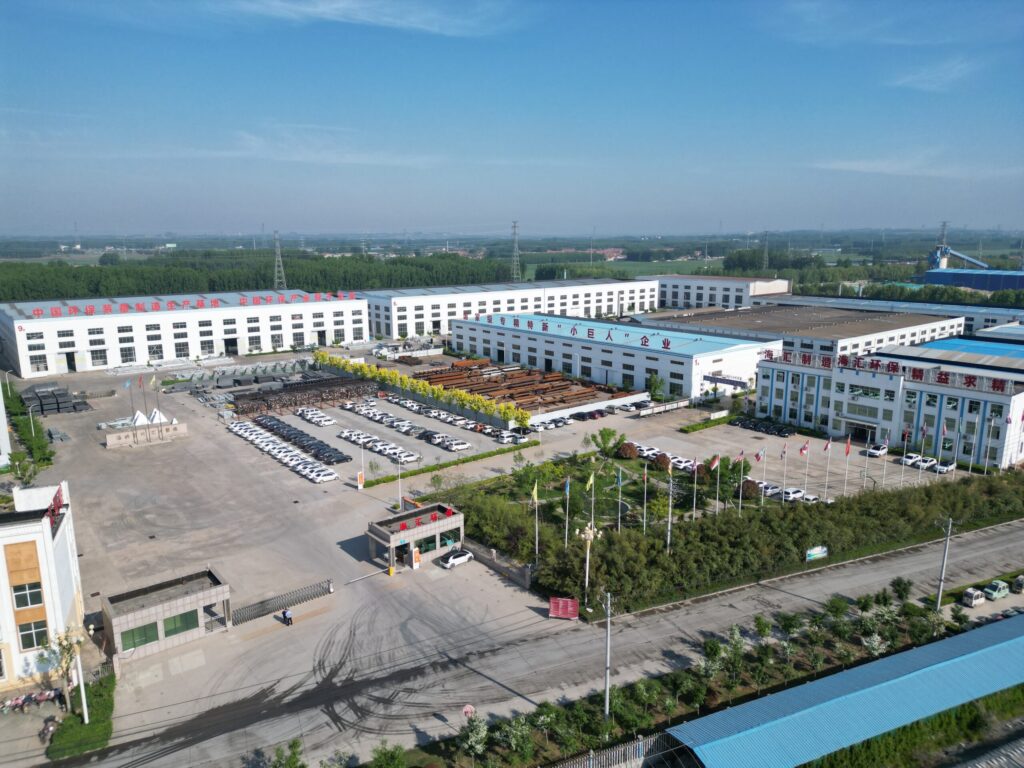
Following the formal establishment of the group structure in 2003, the enterprise expanded from a single core business into a multi-sector industrial conglomerate. This required the marketing team to diversify into specialized business units to handle distinct product categories and risk profiles.
The organizational deployment across these sectors is detailed below:
| Industrial Sector | Core Product Matrix | Primary Market Reach | Required Sales Competency |
| Environmental Protection | Industrial Dust Collectors, Desulfurization Equipment | Domestic Industrial Plants, Infrastructure Projects | Deep technical engineering specs, custom system integration. |
| New Building Materials | Advanced Structural and Insulation Materials | Commercial Construction, Regional Distributors | Supply chain logistics, volume contract negotiation. |
| Special-Purpose Vehicles | Custom Industrial Trucks, Transport Equipment | Municipal Fleet Procurement, Mining Outlets | Regulatory compliance standards, bidding process management. |
| International Commerce | Multi-Sector Export Portfolios | Overseas Logistics, Global B2B Networks | Foreign language fluency, cross-cultural business law. |
| E-Commerce Operations | Digital Component Inquiries, Spare Parts | Inbound Digital Leads, Online Marketplaces | Big data analysis, CRM system lifecycle management. |
Contract Engineering, Risk Mitigation, and Review Protocols
During early expansion phases, an overemphasis on gross contract volume led to structural gaps, such as unverified technical parameters, ambiguous contract clauses, and poorly defined legal responsibilities. To protect profit margins and improve retention, the company established a strict pre-signing validation system.
The optimized contract review workflow utilizes a three-tier gatekeeping mechanism:
- Pre-Sales Technical Clarification: Before a contract is signed, the engineering team and marketing personnel must complete a joint technical audit to ensure the factory’s production capabilities exactly match the client’s custom specifications.
- Synchronized Legal Appraisal: Internal legal teams review all liability clauses, payment terms, and default parameters simultaneously to eliminate ambiguous wording.
- Tiered Order Assessment: Orders are automatically categorized by monetary value and complexity. High-value custom engineering contracts are subjected to multi-departmental panel reviews to identify potential risks before signing.
Digitalization and Mathematical Evaluation of Marketing Efficiency
Starting in 2009, the group accelerated its digital transformation by launching dedicated CRM (Customer Relationship Management) platforms and automated enterprise workflow engines. This system created a closed-loop data pipeline tracking five core stages:
$$\text{Lead Ingestion} \longrightarrow \text{Technical Negotiation} \longrightarrow \text{Contract Signing} \longrightarrow \text{Revenue Collection} \longrightarrow \text{After-Sales Service}$$
To evaluate the operational efficiency of this digital sales pipeline and identify hidden bottlenecks, engineers track the Pipeline Velocity Index ($V_P$) using the following empirical operational research formula:
$$V_P = \frac{N_{leads} \times C_R \times A_{val}}{T_{cycle}}$$
Where:
- $V_P$ = Pipeline Velocity Index, measuring total revenue generating power per unit of time ($\text{USD / Day}$ or $\text{RMB / Day}$)
- $N_{leads}$ = Number of active sales leads qualified within the evaluation period
- $C_R$ = Overall pipeline conversion ratio, calculated as the percentage of leads that successfully convert into signed contracts ($0.0 \text{ to } 1.0$)
- $A_{val}$ = Average financial contract value of converted orders ($\text{USD}$ or $\text{RMB}$)
- $T_{cycle}$ = Average sales cycle duration, measured from initial lead ingestion to final contract signing ($\text{Days}$)
Based on standard industrial optimization benchmarks, if an enterprise targets an efficiency increase, it must systematically reduce $T_{cycle}$ via automated technical pre-checks or maximize $C_R$ through targeted consultative engineering interventions [20].
Systemic Structural Re-Engineering and Modern Frameworks
In 2025, the group implemented a comprehensive management upgrade by integrating the Zhexian Profit Center System (哲贤利润中心系统) and the Changsong Organizational Architecture (长松组织系统). This dual-system integration reshaped the core functions of corporate management:
1. The Zhexian Profit Center Model
This framework decentralizes corporate operations into agile, self-accounting profit centers. Each sub-sector marketing team acts as an independent economic unit responsible for its own profit-and-loss (P&L) statements. This structure eliminates internal cost buffering and directly links team rewards to net margins rather than gross sales volume.
2. The Changsong Organizational Framework
This system redefines the role of management from strict administrative oversight to active fieldwork support. Managers act as co-practitioners and coaches, working alongside frontline personnel on high-value accounts.
This model blends traditional offline relationship building with advanced online data analysis, creating a balanced marketing team capable of driving sales while strictly managing commercial risk.
References and Industrial Standards
- [20] Operational Research and Pipeline Efficiency Models for Heavy Industrial Conglomerates, Journal of Enterprise Resource Management, Technical Planning Edition.




 English
 العربية
 Русский
 Español
 Português do Brasil