Starch Wastewater Treatment Technology for COD, BOD, SS and Nutrient Control
Product Details

Starch Wastewater Treatment Technology for COD, SS and Nutrient Removal

Key Technology

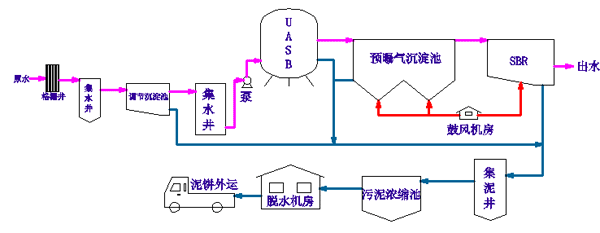
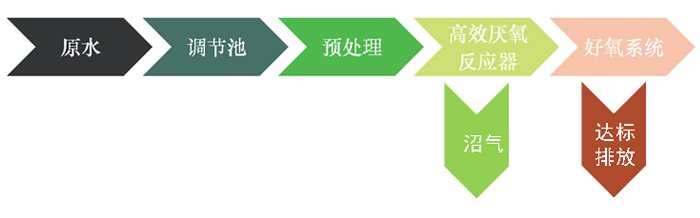
High-concentration organic wastewater from starch processing is treated using an anaerobic-aerobic biological treatment method. The anaerobic treatment unit uses a UASB (Upflow Anaerobic Sludge Blanket) reactor. The aerobic treatment unit uses an SBR (Sequencing Batch Reactor) process.

During anaerobic treatment, difficult-to-degrade CODcr is converted into more easily biodegradable organic matter. Complex high-molecular-weight organic compounds are broken down into simpler low-molecular-weight compounds. This pretreatment improves the effectiveness of subsequent aerobic treatment.

The SBR process operates in batch mode. Each operating cycle consists of five phases: fill, react, settle, decant, and idle. Within each cycle, distinct microbial populations develop that are adapted to the substrate characteristics of each phase. The process includes internal sludge recirculation. Sludge production is low compared to continuous-flow systems.

Technical Advantages

Anaerobic-Aerobic Process Economics

Starch wastewater is a high-concentration organic waste stream. The anaerobic-aerobic process route is economically advantageous. The anaerobic stage treats the bulk of the organic load with low energy consumption. No aeration is required for the anaerobic stage. Additionally, the anaerobic process produces methane-rich biogas that can be captured and used as an energy source, offsetting plant operating costs.

UASB Design Features

The UASB reactor features a dense sludge bed at the bottom. Treatment efficiency depends on intimate contact between the incoming wastewater and the granular sludge. The upflow velocity distributes the wastewater evenly through the sludge bed. The three-phase separator at the top of the reactor separates biogas, liquid, and solids. This separator allows a long sludge retention time while maintaining a short hydraulic retention time, resulting in high treatment efficiency.

SBR Process Maturity and Stability

The SBR aerobic biological treatment method is a mature, well-understood technology. It provides stable treatment performance under varying organic loads. Effluent quality is consistently good. The batch operation allows the operator to adjust cycle times in response to changes in wastewater strength or flow rate.

Customized Implementation

Haihui provides specific implementation plans based on each customer’s actual site conditions, wastewater characteristics, and discharge requirements.
Related Products

Flue Gas Desulfurization Wastewater Treatment System for Coal-Fired Power Plants

Flue Gas Desulfurization Wastewater Treatment System for Coal-Fired Power Plants Product Details Flue Gas Desulfurization Wastewater Treatment System for Coal-Fired Power Plants The flue gas desulfurization (FGD) wastewater treatment system is designed using optimized principles and methods. It offers high treatment efficiency, low operating costs, and low energy consumption. This system is widely used for…

Belt Filter Press for Industrial Sludge Dewatering and Solid-Liquid Separation

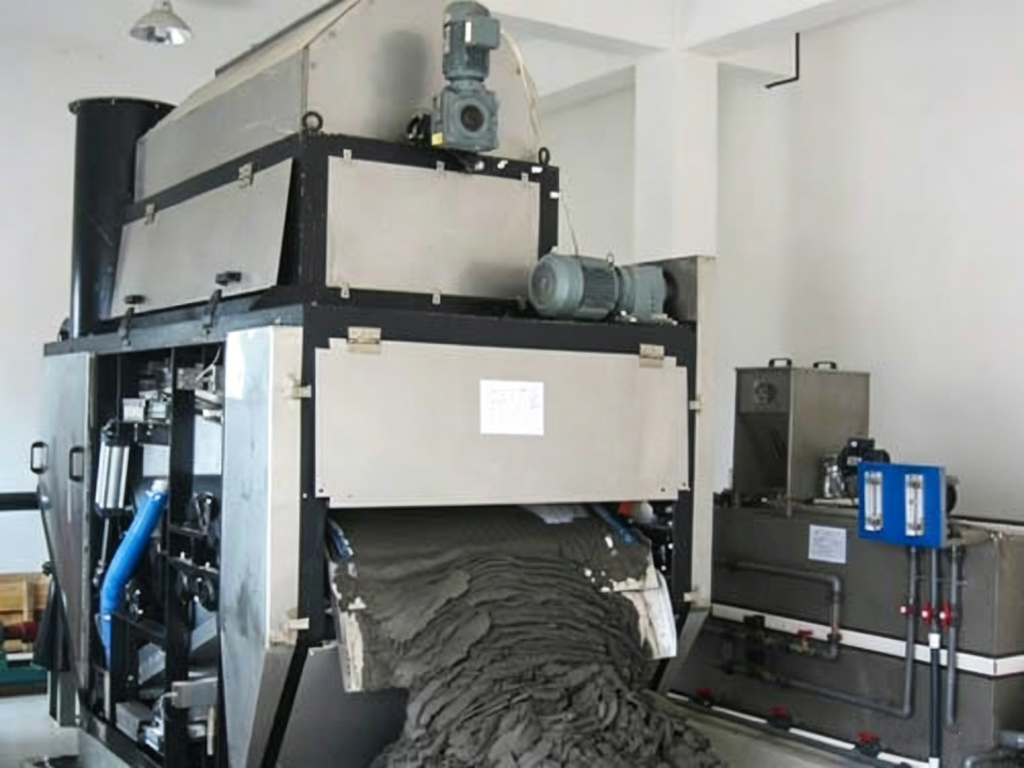
Belt Filter Press for Industrial Sludge Dewatering and Solid-Liquid Separation Product Details Belt Filter Press for Industrial Sludge Dewatering and Solid-Liquid Separation The belt filter press offers several key advantages: high pressure, strong dewatering capability, a high degree of automation, and simple operation. The discharged material achieves a moisture content of less than 78%. This…

MBR Membrane Bioreactor for Domestic Sewage Treatment and Water Reuse

MBR Membrane Bioreactor for Domestic Sewage Treatment and Water Reuse Product Details MBR Membrane Bioreactor for Domestic Sewage Treatment and Water Reuse Technology Overview The Membrane Bioreactor (MBR) process combines biological wastewater treatment with membrane separation technology. Wastewater entering the reactor undergoes biological treatment where organic pollutants are broken down and converted. After biological treatment,…

Tannery Wastewater Treatment Technology for Chrome, Sulfide and Organic Control

Tannery Wastewater Treatment Technology for Chrome, Sulfide and Organic Control Product Details Tannery Wastewater Treatment Technology for Chrome, Sulfide and Organic Control Sulfide Wastewater Treatment Sulfide-laden wastewater from tannery beamhouse operations is treated using catalytic oxidation. Manganese sulfate (MnSO₄) is added as a catalyst to accelerate the oxidation of sulfides. After catalytic oxidation, a sulfur…

Municipal Wastewater Treatment System for Domestic Sewage and Industrial Discharge

Municipal Wastewater Treatment System for Domestic Sewage and Industrial Discharge Product Details Haihui Water Treatment Division: Comprehensive Services for Industrial and Municipal Wastewater The Haihui Water Treatment Division offers a full range of services including consulting and design, proprietary equipment manufacturing, engineering installation, process commissioning and startup, operator training, and facility operation and maintenance under…

Printing and Dyeing Wastewater Technology for Color and COD Removal

Printing and Dyeing Wastewater Technology for Color and COD Removal Product Details Printing and Dyeing Wastewater Technology for Color and COD Removal Key Technologies The anaerobic hydrolysis and acidification stage modifies the molecular structure of complex organic compounds. Large, non-biodegradable dye molecules are broken down into smaller, more readily biodegradable intermediates. This transformation creates favorable…