HZIC Anaerobic Internal Circulation Reactor for Industrial High-Strength Wastewater Treatment

HZIC Anaerobic Internal Circulation Reactor for Industrial High-Strength Wastewater Treatment
Product Details

HZIC Anaerobic Internal Circulation Reactor for High-Strength Wastewater Treatment

Introduction to the HZIC Anaerobic Reactor

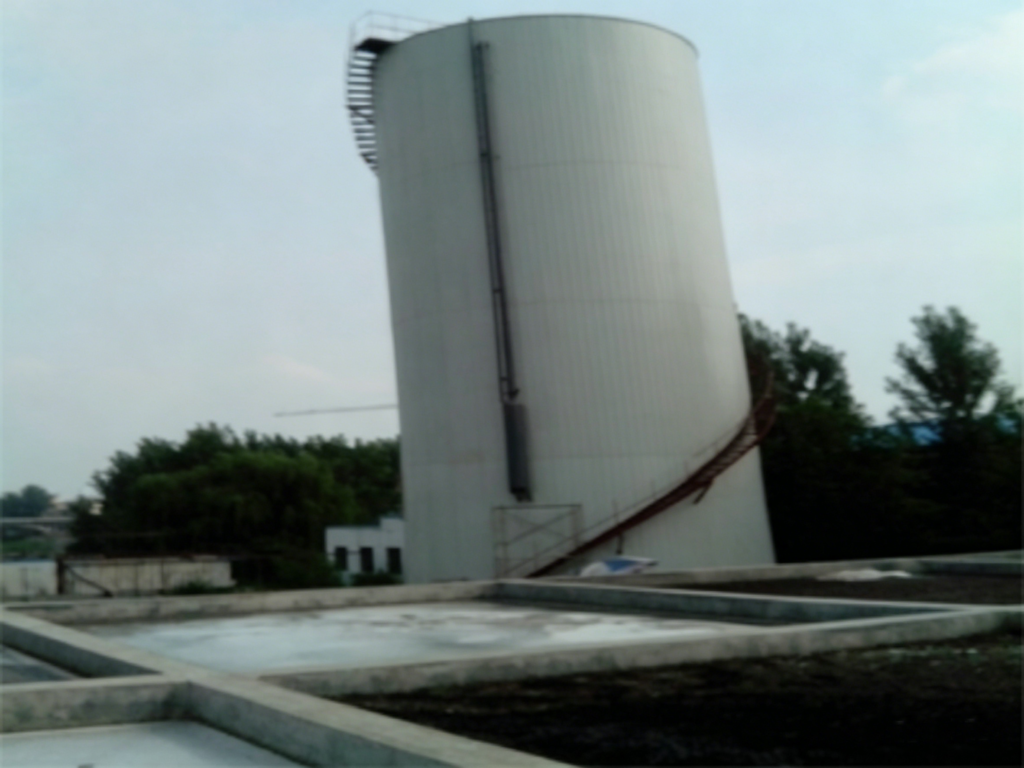
The HZIC anaerobic reactor is a third-generation anaerobic treatment system developed from research on the Upflow Anaerobic Sludge Blanket (UASB) reactor. It uses a two-stage three-phase separator to divide the reactor into two zones: a high-load zone at the lower section and a low-load zone at the upper section.

The reactor relies on the density difference between biogas in the riser and downcomer tubes to create internal fluid circulation. This circulation continuously passes the wastewater through the anaerobic granular sludge bed, enhancing contact between the wastewater and the active biomass. As a result, the wastewater is rapidly purified with high treatment efficiency.

Key Features of the HZIC Anaerobic Reactor

Small Footprint

The HZIC reactor achieves high treatment capacity in a relatively small volume. The internal circulation design allows for much higher loading rates than conventional UASB reactors. For the same wastewater flow and strength, the HZIC reactor requires significantly less floor space.

High Volumetric Loading Rate

The HZIC reactor can operate at volumetric loading rates of 15 to 30 kg COD/m³·day or even higher, depending on wastewater characteristics. This is substantially higher than conventional UASB reactors, which typically operate at 5 to 10 kg COD/m³·day.

Strong Shock Load Resistance

The high biomass concentration and internal circulation provide buffering capacity against sudden changes in flow rate or organic strength. The reactor recovers quickly from peak loads that would upset conventional systems.

Stable Performance

The internal circulation maintains uniform mixing and pH distribution. This stability prevents acidification and ensures consistent effluent quality even under variable operating conditions.

High Biogas Production

The efficient conversion of organic matter to methane results in high biogas yield. The biogas can be recovered and used as an energy source, offsetting plant operating costs.

Simple Operation and Low Operating Cost

The HZIC reactor requires minimal operator attention once started. No mechanical mixing is needed; the internal circulation is driven by biogas. Energy consumption is very low compared to aerobic treatment systems.

Economic Benefits

Lower land requirements, reduced energy consumption, high biogas recovery, and minimal sludge production combine to make the HZIC reactor a cost-effective solution for medium- to high-strength wastewater treatment applications.
Related Products

Flue Gas Desulfurization Wastewater Treatment System for Coal-Fired Power Plants

Flue Gas Desulfurization Wastewater Treatment System for Coal-Fired Power Plants Product Details Flue Gas Desulfurization Wastewater Treatment System for Coal-Fired Power Plants The flue gas desulfurization (FGD) wastewater treatment system is designed using optimized principles and methods. It offers high treatment efficiency, low operating costs, and low energy consumption. This system is widely used for…

Belt Filter Press for Industrial Sludge Dewatering and Solid-Liquid Separation

Belt Filter Press for Industrial Sludge Dewatering and Solid-Liquid Separation Product Details Belt Filter Press for Industrial Sludge Dewatering and Solid-Liquid Separation The belt filter press offers several key advantages: high pressure, strong dewatering capability, a high degree of automation, and simple operation. The discharged material achieves a moisture content of less than 78%. This…

MBR Membrane Bioreactor for Domestic Sewage Treatment and Water Reuse

MBR Membrane Bioreactor for Domestic Sewage Treatment and Water Reuse Product Details MBR Membrane Bioreactor for Domestic Sewage Treatment and Water Reuse Technology Overview The Membrane Bioreactor (MBR) process combines biological wastewater treatment with membrane separation technology. Wastewater entering the reactor undergoes biological treatment where organic pollutants are broken down and converted. After biological treatment,…

Starch Wastewater Treatment Technology for COD, BOD, SS and Nutrient Control

Starch Wastewater Treatment Technology for COD, BOD, SS and Nutrient Control Product Details Starch Wastewater Treatment Technology for COD, SS and Nutrient Removal Key Technology High-concentration organic wastewater from starch processing is treated using an anaerobic-aerobic biological treatment method. The anaerobic treatment unit uses a UASB (Upflow Anaerobic Sludge Blanket) reactor. The aerobic treatment unit…

Printing and Dyeing Wastewater Technology for Color and COD Removal

Printing and Dyeing Wastewater Technology for Color and COD Removal Product Details Printing and Dyeing Wastewater Technology for Color and COD Removal Key Technologies The anaerobic hydrolysis and acidification stage modifies the molecular structure of complex organic compounds. Large, non-biodegradable dye molecules are broken down into smaller, more readily biodegradable intermediates. This transformation creates favorable…

Tannery Wastewater Treatment Technology for Chrome, Sulfide and Organic Control

Tannery Wastewater Treatment Technology for Chrome, Sulfide and Organic Control Product Details Tannery Wastewater Treatment Technology for Chrome, Sulfide and Organic Control Sulfide Wastewater Treatment Sulfide-laden wastewater from tannery beamhouse operations is treated using catalytic oxidation. Manganese sulfate (MnSO₄) is added as a catalyst to accelerate the oxidation of sulfides. After catalytic oxidation, a sulfur…