
Domestic Wastewater Treatment Project – BAF (Biological Aerated Filter): A Case Study
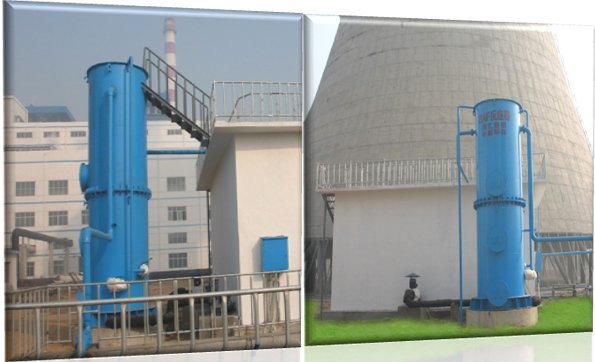
Case study
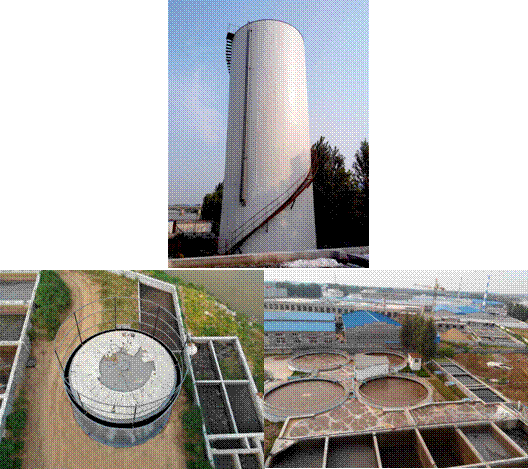
This domestic wastewater treatment project is one of the flagship case studies of Haihui Group’s Water Treatment Division. During the project’s implementation, Haihui Group fully leveraged the outstanding advantages of its core technology—the BAF aerated biological filter—to ensure the efficient and stable operation of the wastewater treatment system.
The BAF aerated biological filter process demonstrated several significant advantages in this project. Firstly, the effluent quality is excellent; through the dual action of biological oxidation and filtration retention, it consistently meets high discharge standards. Secondly, the process has a small footprint; by integrating biological reaction with solid-liquid separation, it significantly conserves land resources, making it particularly suitable for village and town projects or urban regeneration schemes where land is scarce. Thirdly, capital investment is low; due to the small tank volume and compact structure, the volume of civil engineering work is relatively low, effectively reducing project construction costs.
In terms of operation, the BAF aerated biological filter incurs low running costs, with energy consumption significantly lower than that of the conventional activated sludge process. Furthermore, the filter media has a long service life, keeping maintenance costs manageable. At the same time, the process exhibits strong resistance to shock loads and demonstrates good adaptability to fluctuations in water quality and flow, ensuring stable system operation even under adverse conditions. Furthermore, the BAF process is free from sludge bulking issues and maintains excellent treatment performance even under low-temperature conditions, demonstrating outstanding cold-weather performance. The system employs automated control, enabling unattended operation and facilitating convenient management. It is also worth noting that the BAF aerated biological filter features a modular structural design, making it easy to expand or modify the process later on according to actual needs, offering good flexibility and scalability.
Similar cases
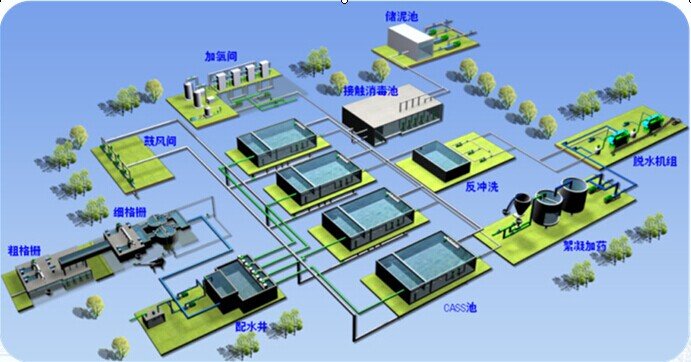
Municipal Wastewater Treatment Project
Case study This municipal wastewater treatment project is one of the flagship projects of Haihui…
Domestic Wastewater Treatment Project – BAF (Biological Aerated Filter): A Case Study
Case study This domestic wastewater treatment project is one of the flagship case studies of…
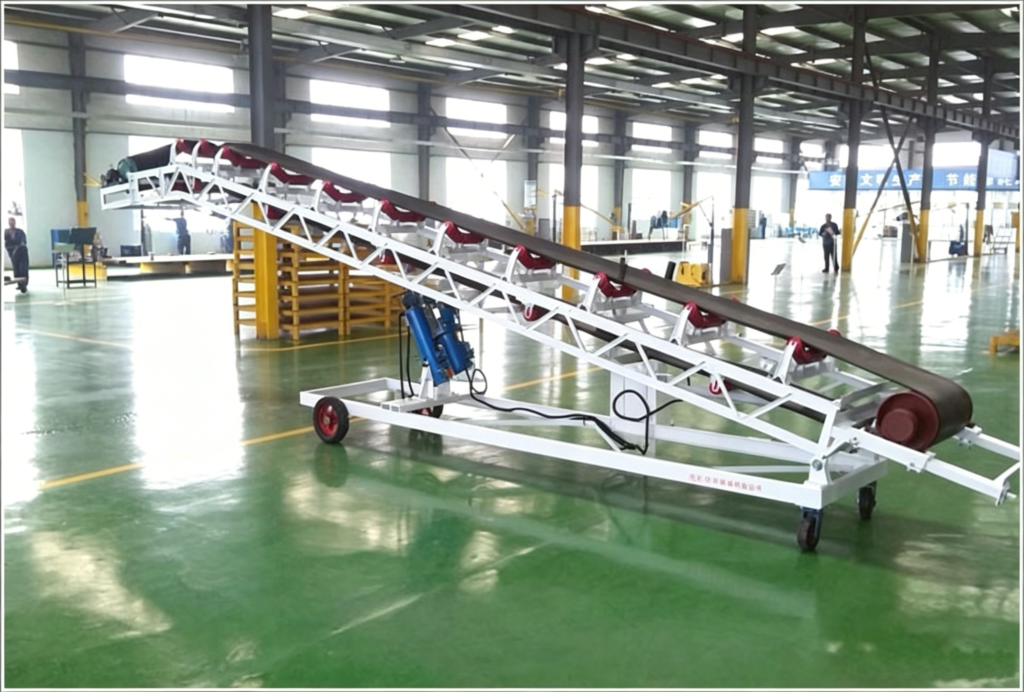
Grain Conveyors – Typical Applications of the New Mobile Elevating Belt Conveyor in the Grain Industry
Case study Haihui Group has launched a new mobile, height-adjustable belt conveyor equipped with swi…
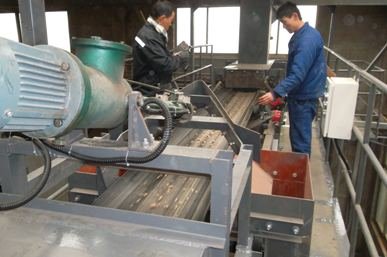
Applications of Haihui Group’s Belt Conveyors in Confined Spaces
Case study The Belt Conveyor Division of Haihui Group undertook a particularly challenging project: …
Wastewater Treatment Project for a Food and Beverage Company in Linyi
Case study Haihui Group has successfully secured the contract for the wastewater treatment project a…
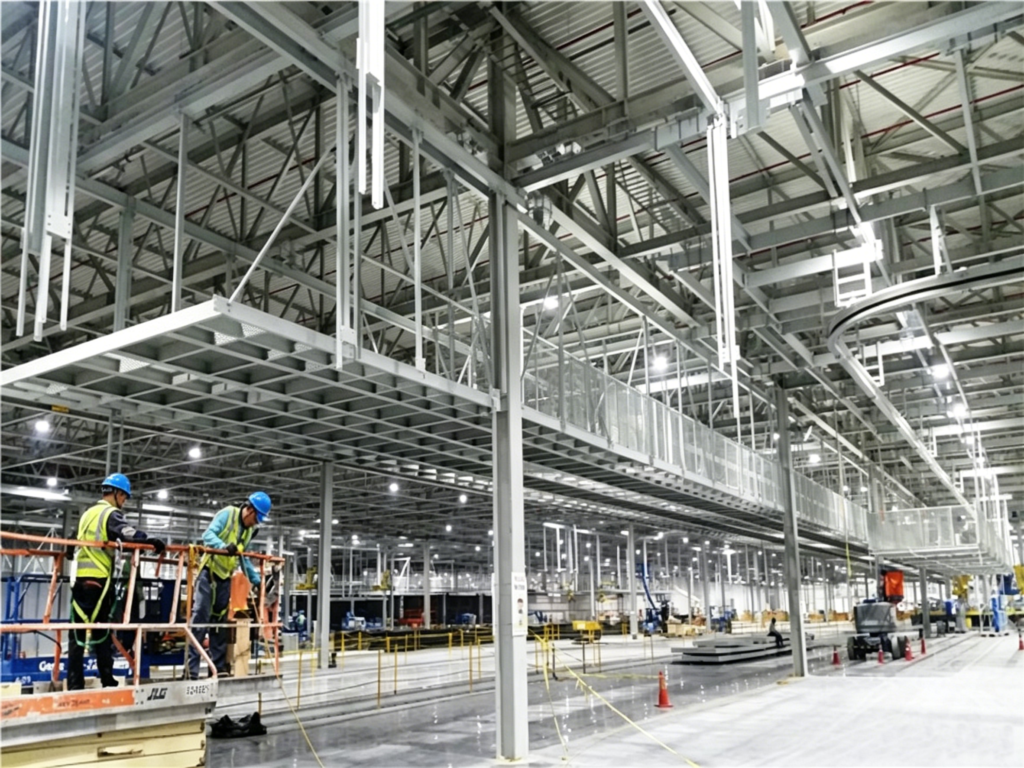
Kia Mexico Vehicle Assembly Plant Steel Structure Project – Steel Structure
Case study Haihui Group has successfully secured the contract for the steel structure project for…