
Project for the Installation of a Baghouse Dust Collector and Wet Flue Gas Desulphurisation System for a Circulating Fluidised Bed Boiler in Guangdong Qujiang
Case study
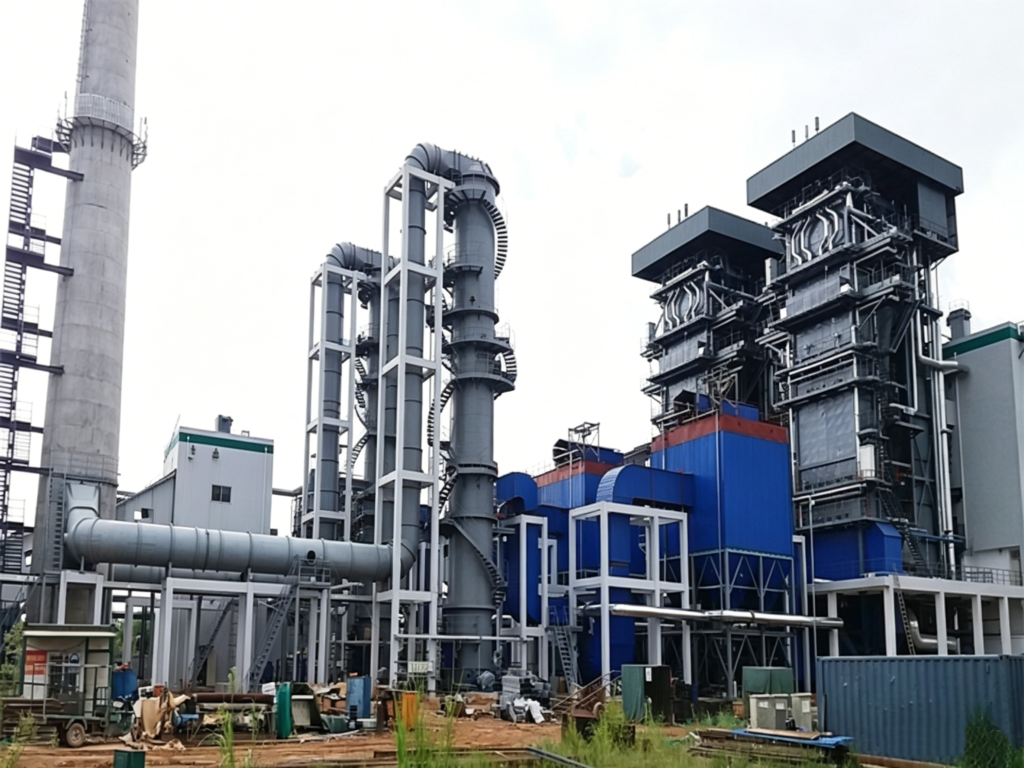
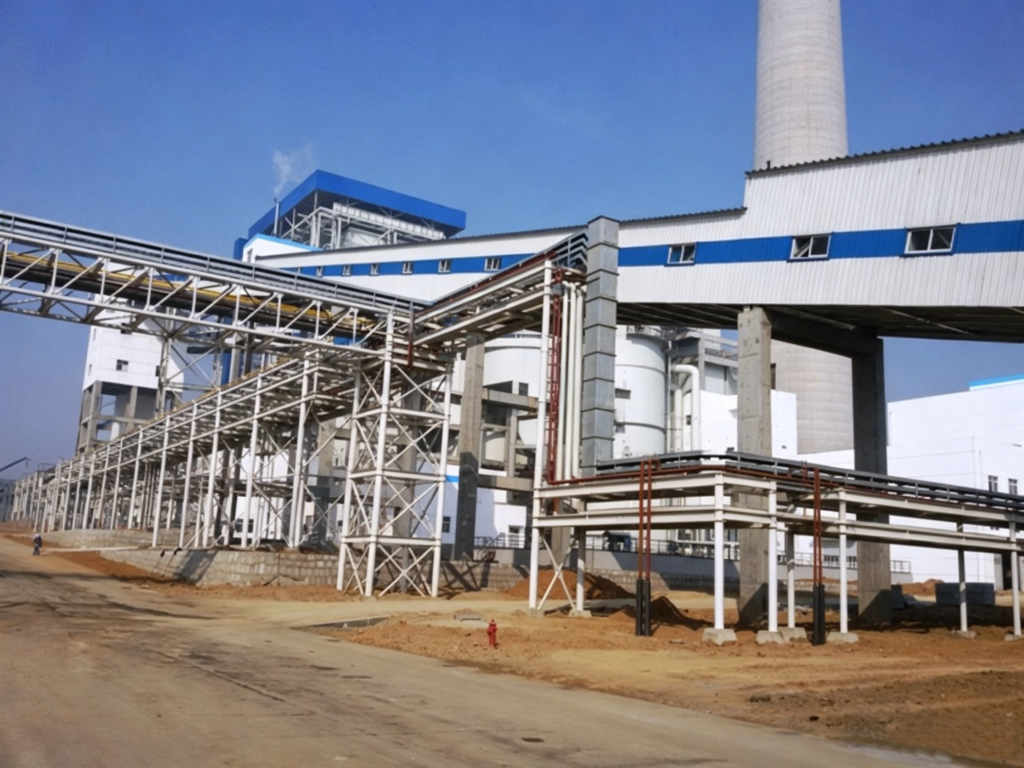
Haihui Group has successfully secured and implemented the core environmental protection works for the centralised heating project in the Guangdong Qujiang Economic Development Zone—namely, the baghouse dust collection and wet flue gas desulphurisation systems for the circulating fluidised bed boilers. The project utilises high-efficiency dust removal and desulphurisation technologies independently developed and extensively applied by Haihui Group, fully demonstrating the company’s technical expertise in the field of flue gas treatment.
For the dust removal equipment, the project selected the ‘Haihui’ brand LCMD series low-pressure long-bag pulse baghouse dust collector. This dust collector features high cleaning intensity, high dust removal efficiency, low operating resistance and significant energy-saving benefits. Its main steel structure was designed and manufactured to exacting standards, resulting in a system that is aesthetically pleasing, robust and durable, whilst also taking full account of ease of maintenance. Furthermore, the system is equipped with a cyclone mist eliminator, effectively achieving ultra-low emission targets. The entire system utilises a high-performance DCS remote control system, which is fully integrated and user-friendly, enabling real-time monitoring and intelligent management of equipment operating conditions.
The process flow for flue gas treatment in this project is as follows: the flue gas first passes through the baghouse dust collector for high-efficiency dust removal, before entering the wet desulphurisation system for advanced desulphurisation treatment. Ultimately, the concentration of particulate matter at the flue gas outlet is controlled to below 10 mg/Nm³, whilst the concentration of sulphur dioxide is controlled to below 35 mg/Nm³; both indicators are well below the requirements of current national environmental protection standards.
Thanks to its high-standard design and ultra-low pollutant emissions, the project has earned high recognition and praise from the client, becoming one of the exemplary projects for environmental protection support in regional district heating schemes.
Similar cases
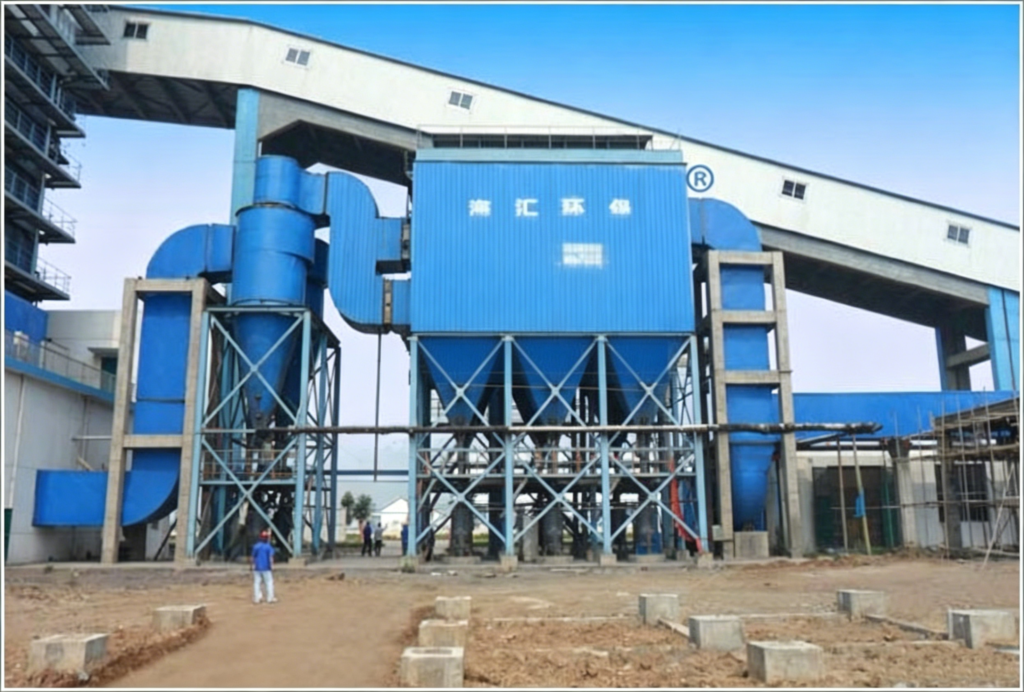
Biomass Cogeneration Plant Dust Removal Project—Pulse-Jet Baghouse Dust Collector
Case study The Haihui brand pulse-jet baghouse dust collector employs an advanced principle of compa…
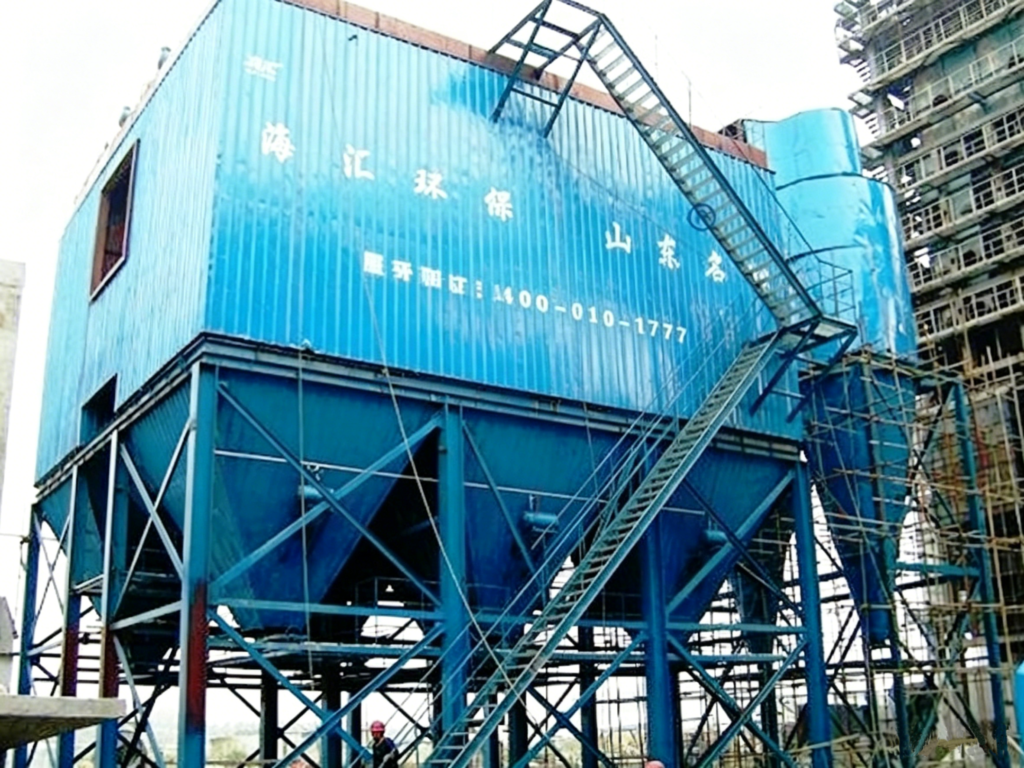
Dust Removal Project for a 130 t/h Circulating Fluidized Bed Boiler at a Power Plant in Hebei—Pulse-Jet Baghouse Dust Collector
Case study Haihui Group has successfully completed the manufacture and installation of a large-scale…
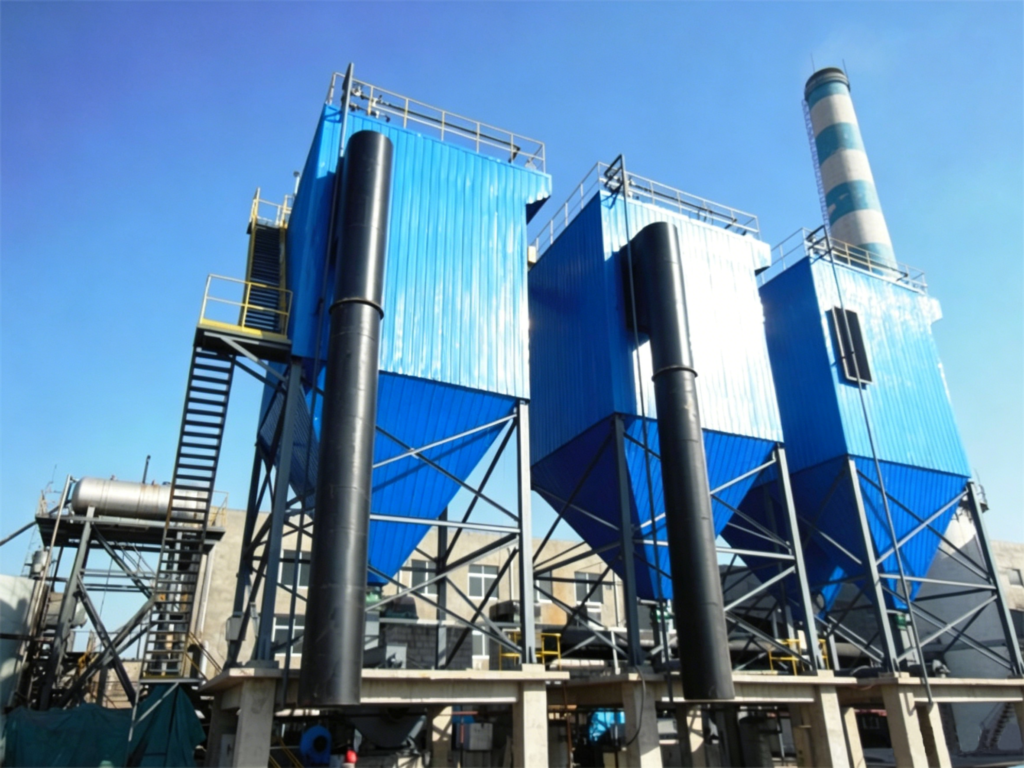
Shifeng Group Power Plant Dust Collector Retrofit Project—Electrostatic-Bag Hybrid Dust Collector
Case study The No. 2 dust collector retrofit project at Shifeng Group’s power plant, undertaken…
Liyuan Thermal Power Company Dust Removal and Conveying Project—Baghouse Dust Collectors, Belt Conveyors
Case study Junan Liyuan Thermal Power Co., Ltd. is a key subsidiary of the Linyi…
Project for the Installation of a Baghouse Dust Collector and Wet Flue Gas Desulphurisation System for a Circulating Fluidised Bed Boiler in Guangdong Qujiang
Case study Haihui Group has successfully secured and implemented the core environmental protection w…